The Etude
Name the Composer . Etude Magazine Covers . EtudeMagazine.US . Selected Etude Magazine Stories . About


An Interview Secured Exclusively for the Etude With the Famous Virtuoso
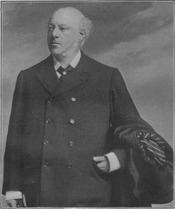
VLADIMIR DE PACHMANN
Who at the Age of Seventy-five Has Remolded His Entire Repertoire According to New Principles Which He Claims Are of Paramount Importance


pachmann_at_75.jpgEditor’s Note: Vladimir De Pachmann was born in Odessa, July 27, 1848. At first he was a pupil of his father, who for years was a Professor of Roman Law at the University and a highly cultivated amateur violinist. Later, in 1886, he became a pupil of Dachs at the Vienna Conservatory. He has repeatedly created furores by his tours in Europe and in America. He was knighted by the Danish government in 1885 and in 1916 received the highly coveted Beethoven medal from the London Philharmonic Society. In I884 he married his former pupil, Maggie Oakey, a fine pianist and composer whose opera “Yato”  was produced in Paris in 1913. After their divorce she became the wife of Fernand Labori, the noted French attorney who defended Dreyfus in the trial which startled Europe. De Pachmann is famed for his lovely velvety touch and his exquisite perform­ances of Chopin.

“It is regrettable that any newspaper should have quoted me as saying anything so outrageous as that I approved of playing the king of instruments, the piano, with stiff wrists. Before attempting to explain the new principles upon which I have seen fit to re-work my entire repertoire, let me say that it is impossible to play the piano with stiff wrists and produce anything but execrable results. Flexible wrists are the basis of all good piano playing; and it would be mad for anyone who has been before the public as a virtuoso for half a century to say anything to the contrary. I have heard all of the great pianists of my time and those who have achieved the most artistic results are those who have had least constraint at the wrist joint.

“When I arrived in this country early in the fall, I was overwhelmed by reporters who were only too anxious too secure something sensational and who in most cases seemed totally ignorant of the piano, to say nothing of the art of music when considered on a lofty plane. They utterly misinterpreted my thought; and if I now make a statement of the most emphatic kind it would be that the new principles I have been working upon are the very opposite of anything like a stiff wrist. I realize that such a false statement might become current and do a great deal of damage; and therefore I am  glad of this opportunity to express myself exactly upon these most important points.

Piano Most Complete Instrument

“When I first commenced the study of music I was six years old. My father was a violinist and a man of great foresight. Naturally, he taught me the violin; and it was not until I was ten years old that he saw that my chief interest was in the piano. Then he started to teach me the piano. The piano is the finest solo instru­ment in the world; because it is complete. It is even more complete than the organ because its keyboard, its normal expressive range, is greater although its variety of tone is not as great as that of the organ. I have never liked any of the other solo instruments as such. In the combination of the grand orchestra they are magnificent; but otherwise they seem incomplete to me.

“In my early pianistic training my father was too much concerned in teaching me music to take any time with the niceties of touch or technic. Of hand position I knew nothing. My texts at the beginning were the ordinary instruction books. If I remember rightly, they were those of Muller or Adams, the ancestors of thou­sands of similar books which have appeared since then and are so necessary in introducing the little child to the mysteries of music and the keyboard.

Study as Much Music as You Possibly Can

“The main thing in early training is to master as much music as you can. The repertoire of the instru­ment is enormous. My father was a critic but not a pianist. He merely advised me but could not show me how. I studied everything that came my way. How long did I practice? It would be easier to find out how long I didn’t. I was at work at it all the time. Good health permitted me to work enormously. I felt that either you play or you don’t. If I was to encompass the great art, all the time was none too much for me to work. Of course, the student must grade his work and it is a great mistake to jump ahead to greater difficulties until one has mastered one grade and played an enormous amount of music in that. Now music is very cheap; and I would advise the student to play everything he can lay his hands upon, just as a hungry boy devours a meal. If he encounters a difficulty and it does not disappear after one hundred repetitions he should play it a thousand times. Artistic and pianistic ideals of touch, tone, phrasing, nuance, fingering must be held at the highest possible level and never given up until they are as fine as possible.

“I studied, largely by myself, Bach, Beethoven, Chopin and the then popular Thalberg, everything. Working alone, it was necessary for me to do a great deal and the student who is pining for a great teacher may, in this day of low-priced music, work by himself and acquire a technic and a repertoire which would put to shame some of the students who use a teacher as a kind of crutch. This was certainly my own experience. Everything de­pends upon your deep-seated love for the art your willingness to sacrifice and your endurance. If you can not have a teacher, do not think of giving up, but work, work, work! Let me recount my own experience when I went to Dachs.

“Dachs was considered one of the greatest piano teachers of his day. He had been a pupil of Czerny and was a most careful and exacting pedagog. When I was twelve years old my brother made me a birthday present of the Forty-eight Fugues of the “Well-tempered Clavichord” of Bach. I adored them as study material. When I went to Dachs for my two lessons a week he assigned me two fugues for the first one. When I came I asked what key he would like to hear them played in. He thought this was a joke and named a difficult key. But after I had played them he called in the director of the conservatory and had him listen. Then I told him that I could play any of the fugues in any key and they were both amazed. I cite this merely to show the student who is struggling along without a high-priced teacher that even the authorities of a great conservatory can be astonished by what real love for playing and hard work can produce. Of course, I played the fugues from memory. After this I played for them the Chopin Sonata in B Minor and they saw that a very different course would have to be devised for me. Many of the graduates of the conservatory, with all the advantages of years of study under great experts, could not have done as much as I did virtually alone. The instruction in those days was two golden a lesson. Alas! what would four kronen buy in Austria now?

pachmann_003.jpg

The Real Secret

“Piano students are always looking for some great secret of success. There are no real secrets but love of the art and enormous work. This must of course be combined with thoroughly natural conditions of the hand and arm which I shall describe later with some detail. Even to-day, at the age of seventy-five, I find that I must practice five or six hours a day. This has been made necessary by the fact that I have reworked down to the finest detail my entire repertoire; and I refuse to play a piece unless this has been done. I have no charlatan’s trick to sell at great price. It is all so simple that I cannot see why some one has not chanced upon this fundamental principle before. Since I have been playing in this way critics in European centres have made more flattering comments than ever before and have been making comparisons with great pianists of the past and present which are superlative.

Fluidity in Playing

“During my three-score and fifteen years I have heard many times all the great pianists of the day. I have watched them closely. Liszt himself attended my first concert in Budapest. He sat in the first row; and after the concert we had supper together in my quarters. At the end of the concert he came upon the stage and congratulated me most effusively, even going so far as saying, ‘I wish that Chopin had heard you play.’ Later in the evening I played his arrangement of Auf Flügeln des Gesangcs and he said, ‘So, I like it,’ with great en­thusiasm. He then played his arrangement of Chopin’s Chant Polonaise. I shall never forget it. It was like some wonderful voice singing. Liszt was transcendentally the greatest of all pianists. He played like a god.

“Later I met Liszt at his home in Rome, during a time when Richard Wagner was staying with him. I had the honor of playing for both of them. I played the Chopin Ballade in G minor and was again over­whelmed by the generous praise of both. Liszt insisted that I played it better than Chopin who had mannerisms in his playing at times.

“During all these years it seemed to me that the greatest method of playing the piano was that in which the masterpiece to be interpreted could be permitted to come from the soul of the interpreter to the instrument with the greatest possible fluidity. Of course, this pre­supposes that the interpreter must be possessed of the highest musicianship and an all-adequate technic. Yet I always felt that there was something which impeded the message, something which clogged up the lines of muscles and nerves. This very thought preyed upon me for years. I could not sleep at night because of it.

Thinking did not seem to solve the problem; because I knew that there must be some fundamental principle underlying the whole thing. Inspiration did what think­ing would not do; and I discovered that the whole trouble lay in the wrist. The wrists were not free. Easily said—but WHY?

“Perhaps a simple experiment will serve to illustrate. Put your elbow upon the table and let your forearm fall with your hand in comfortable playing condition. Do not curve the fingers too much, because that is unnatural.

“Now, with the hand and forearm in this position, move the hand (without moving the forearm) as far as possible to the left and hold it in that position for a few moments. You will notice at once that there is a strain at the joint of the wrist. Now move the hand in the opposite direction and there is likewise a strain. It is this strain that, to my mind, distorts the muscular and the nervous condition of the hand and the forearm and results in much horrible playing. The tone cannot be musical and beautiful if the wrist is stiff or strained in this manner. Therefore I never move the hand from side to side. The lateral movement occurs at the elbow or at the shoulder and not at the wrist. The hand is on a straight line with the arm. Is this ‘stiff wrists?’ On the contrary it is the very opposite, and the one sure remedy for stiff wrists. The hands and arms are always free and unconstrained.

“Having discovered this, I began to find that, whereas I had been unable to practice for long periods in later years without fatigue, I was now able to play for hours and hours and ‘never feel it.’

“What was the result? I resolved to rework, re­arrange my entire repertoire upon this new basis. This meant refingering hundreds and hundreds of pages of music. You see, the music editors for the publishers are first of all fine musicians and only secondarily pian­ists. They do not understand and recognize the dif­ficulties of the instrument. Even a great mind like von Bulow did not recognize this. If the music forced the hand into an awkward position it was immaterial. As a result of this they paid attention to indicating the harmonic structure of the work by writing the different parts or voices on different clefs, with little considera­tion for the pianist’s hand. Even in as highly pianistic a composer as Chopin, if one follows the best editions upon the market, the hand is often forced into painfully strained positions. I will not ‘spoil’ my playing hand in this way. If I encounter a passage which demands strain I work with it, refinger it, rearrange it until the strain disappears. This has obliged me to make thou­sands of changes of hand positions and fingerings.

“This adds difficulty at first; but the artistic reward is enormous. Take Chopin’s exquisite Nocturne in B Major and rework it yourself, remembering that there must be no disturbance of the normal position of the hand, no lateral movement at the wrists to squeeze the nerves and muscles and make your playing hard and unmusical.”


pachmann_001.jpg

De Pachmann sat at the keyboard and played the lovely Chopin masterpiece with a dreamlike, songlike, velvet­like tone which is historic in this master of the instru­ment. Coming to the end, he stopped and said, “Here is something that Liszt told me, ‘When Chopin was writing this it was in a house in which were a number of young people. He heard them approaching. He was indignant at the disturbance and looked up and finished the noc­turne thus:

pachmann_002.jpg

“See,” exclaimed De Pachmann with emotion, handling a long grey Alpaca coat, ragged and bronzed with years, “this was Chopin’s own coat. It came to me through friends of George Sand. I have had it for years. It is over eighty years old. I take it with me everywhere. Is it not an inspiration even to touch something of so great a master?”

Basic Principles in Pianoforte Playing
Secured Exclusively for The Etude by Interview with the Famous Virtuoso Pianist
JOSEF LHÉVINNE
This Series Began in the “Etude” for October

lhevinne_000_001.jpg

“IN our first discussion of this sub­ject we dwelt at considerable length upon the fact that before the student even considers the matters of technic and touch, a good grounding in real musicianship is necessary. I cannot leave this phase of the matter without pointing out that a knowledge of the keys, the common chords, and the seventh chords, should be as familiar to the stu­dent as his own name. This would not be mentioned were it not for the fact that I have repeatedly had students come for instruction who have after great effort prepared one, two, or at the most three show pieces, even pieces as far advanced as the Tschaikowsky or the Liszt Con­certo, who barely knew what key they were playing in. As for understanding the modulations and their bearing upon the interpretations of such com­plicated and difficult master works, they have been blissfully ignorant.

“Study of this kind is not only a great waste of the pupil’s time but also a disgusting waste of the time of the advanced teacher, who realizes that he is not train­ing a real musician but a kind of musical parrot whose playing must always be meaningless. Often these pupils have real talent and cannot be blamed. They simply have had no teacher in the early years with patience and sufficient will power to hold them back until they have been exhaustively drilled in scales and arpeggios. A smattering will not do. They must know all the scales in all the keys, major and minor, and they must literally ‘know them backwards.’ They must know the inter­relationship of the scales; for instance, why G# minor bears a harmonic relationship to c-flat major.

Instinctive Fingering

“The scales should be known so well that the student’s fingers will fly to the right fingering of any part of any scale instinctively. The trouble with many students is that they attempt difficult problems in what might be termed musical calculus or musical trigonometry with­out even ever mastering the multiplication table. Scales are musical multiplication tables. One good way of fix­ing them in the mind is to start to play the scales upon the different tones of the key consecutively.

“Take the scale of E major, for instance. Play it first this way, starting with the keynote.

lhevinne_001.jpg

“Next start with the second note of the scale with the second finger, thus:

lhevinne_002.jpg“Then with the third finger, thus :

lhevinne_003.jpg 

“Then with the fourth note with the thumb, thus :

lhevinne_004.jpg

“Continue throughout the whole scale; and then play them in similar manner with the right and the left hand together. Treat all the scales in the same manner.

“Most pupils look upon scales as a kind of musical gymnasium for developing the muscles. They do that, of course, and there are few technical exercises that are as good; but their great practical value is for train­ing the hand in fingering so that the best fingering in any key becomes automatic. In this way they save an enormous amount of time in later years. They also greatly facilitate sight reading, because the hand seems to lean instinctively to the most logical fingering, to elect it without thinking. Take it for granted, you may have too little scale practice, but you can never have too much.

“The study of harmony is also a great time saver in piano playing. Know the chords and know the fingering of all the arpeggios, which is really logical fingering of most of the common chords. Don’t pay a teacher a high fee later in your musical life to have him point out something that you should have learned in the musical primary class.

The Value of Ear Training

“Ear training is also of very great importance. Most students hear, but they do not listen. The finest students are those who have learned how to listen. This becomes an axiom with teachers of advanced pupils. The sense of aural harmony cannot be too definitely developed. The pupil who cannot identify chords, such as the com­mon chords, and the seventh chords, by ear, stands about as much chance of entering the higher realms of music as the student who does not understand a word of Latin does of comprehending a page from Virgil when he hears it read to him.

“There is no way of dodging or sidestepping this knowledge. I am obliged to say a hundred times a week, ‘Listen to what you are playing.’

“Absolute pitch is by no means absolutely necessary. I have it and have always had it. Safonoff, my own master, did not. Rubinstein did. Sometimes it is a disadvantage. I cannot think of any composition except in the key in which it was written. Sometimes when a piano is a whole tone flat or a half tone sharp, I become fearfully confused, as it does not seem that I am playing the right notes. I instinctively start to transpose the sounds to where they belong and thus get mixed up.

Essentials of a Good Touch

“The matter of touch is so all-important that the re­mainder of this section will be devoted to the subject. Even then, we cannot hope to cover more than a fraction of the things that might be said. Have not whole books been written upon the subject? Indeed, there is now in the different languages of the musical world, what might be called a literature of touch.

‘First of all, let us consider our playing members, the fingers, the hand, with its hinge at the wrist to the arm, and finally the torso—all of which enter into the problem of touch. With me, touch is a matter of elimination of non­essentials, so that the greatest artistic ends may be achieved with the simplest means. This is a general principle that runs through all the arts. Thus, in the manipulation of the fingers on the keys, I direct my pupils to cut out any action upon the part of the fingers except at the metacarpal points.

“The metacarpal joints are the ones that connect the fingers to the hands. Of course there are exceptions, when the other joints of the fingers come into play. These we shall discuss later; but for the main part we shall progress far more rapidly if we will learn the great general principle of moving the fingers only at the joint where the finger is connected with the body of the hand. There was a time, I am told, when the great aim of the piano teacher was to insist that the hand be held as stiff and hard as a rock while the fingers rose to this position, in which all of the smaller joints were bent or crooked, and then the finger descended upon the key like a little sledge hammer. The effect was about as musical as though the pianist were pounding upon cobble stones. There was no elasticity, no richness of tone, nothing to contribute to the beauty of tone color of which the fine modern piano is so susceptible. Now, the finger arises in this position and the movement up and down is solely at the point marked :

lhevinne_005.jpg

“Before proceeding farther we have to admit that touch is largely an individual matter and that the nature of the player’s hand has a great deal more to do with it than most people imagine. In days gone by there was an impression that a long, bony; fleshless hand, with hard finger-tips, was a good pianistic hand. It may be for execution of florid passages and great velocity; but for the production of a good tone it can be extremely bad.

“Rubinstein had a fat, pudgy hand, with fingers so broad at the finger-tips that he often had difficulty in not striking two notes at one time. Indeed, as I have pointed out hitherto, many of the so-called mistakes that he made were due to this condition. On the other hand, his glorious tone was in no small measure due to this. Indeed, it may be said that the thicker the cushions of flesh upon the finger-tips, the wider the range of variety of touch. Rubinstein, by means of an unearthly amount of work at the keyboard, was able to overcome technical obstacles and get the benefit of the responsive cushion he had at the ends of his fingers. This is merely a mechanical and acoustical principle. It is easy to distinguish when one listens to a metal xylo­phone. If the bars of the xylophone are struck with a hard metal rod, the tone is harsh and ‘metallic.’ Let them be struck with a rod with the end covered with soft felt and the tone is entirely different and beautifully musical. You may not think this applies to the tone of the pianoforte; but a little experimenting will soon show that it is the case.

Amateurs with Naturally Fine Touch

“It thus happens that many amateurs, who know little about music itself, possess a touch which is very beauti­ful merely because they have accidentally learned how to play with right arm conditions and with the proper part of their finger-tips; so that, instead of delivering a bony blow to the ivory surface, they touch the keys with felt-like cushions of human flesh and produce a really lovely tone without knowing how they do it. With proper instruction along these lines, I shall hope to make clear in ensuing sections of this series that it is possible for the person with an inferior touch to develop his tone amazingly.

“Of course, a brittle touch is quite as necessary at times as the mellifluous singing tone. Brilliancy is as important as ‘bel canto’ in piano playing. One general principle, however, is that of striking ‘key bottom.’ Many students do not learn this. The piano key must go all the way down in the production of a good tone. The habit of striking it half way accounts for much white or colorless playing. Many students do this without knowing it. It is a habit that quickly grows upon one. More than this, it contributes a kind of hesitancy and lack of sureness to playing that is decidedly inartistic. The player never seems sure of himself.

“During your next few practice periods, analyze your own playing and note carefully whether you are skim­ming over the surface of the keys. Unless you have had a very thorough early training, you will probably discover that one note in every ten is slighted. It may be just enough to give your whole playing an amateurish complexion. If you find that this is the case, return to the practice of slow scales and then slow, simple pieces with good melodies, and simple chords. Scores of students play chords with some of the notes striking key bottom and others only half way down. The full effect of the harmony is thus lost. Of course, you may not suspect that you do this; but do you really know?

“In the next section of this article we shall continue this discussion of beautiful tone-color, revealing what seems to be the real secret of a lovely singing tone. It is really quite a simple matter when the underlying principle is correctly understood. Of course, if the student has the privilege of studying it under a good teacher, it may be more rapidly acquired; but there is no reason why the main essentials cannot be told in print.”

To the Beginners in Harmony.

Studying harmony means gaining a working knowledge of the materials used in making music. It does not necessitate a gift for composition; it does not require that you have even so much as a desire to write music; but, as you who play use exactly the same materials as he who writes music, you should have a thorough knowledge of these materials; and this knowledge it is possible for you to obtain with­out any great amount of trouble. The conservatories of music the country over are filled, for the most part, with girls of but a fair musical ability and an ordinary amount of intellect; and these girls com­plete the course in harmony without any very severe mental throes, or nervous prostration, or any of the other evils popularly supposed to go with this study. So also may you, if you go about it in a sane and sensible way, and resolve with the beginning of the New Year to follow two bits of advice: one about your text-book, the other about your teacher.

Text-Book.

First about your text-book. It is very natural, when a girl does not “get on,” to say: “Well, I don’t like this text-book anyway; I don’t think it is a good one.” Any standard text-book is a good one, and contains all that you need to learn of har­mony; and it is certain that your teacher will have you use only the best obtainable, as it is to his own interest to work with the one which best supplements his teaching.

The use of the text-book.

I have found the real trouble to lie in the way in which you use your text­ book. In harmony you are not through with a chapter when you have studied it once thoroughly. Each new lesson is for the ap­plication of a new principle, but there must come into every lesson those principles which you have passed, so that harmony means a constant turning back, a constant looking at old lessons with new lights upon it; a conning over of these principles so many times that they will eventually become a part of your sub­conscious brain. But this will not be for a long time, and, in the meanwhile, when you come to a hard place, instead of sitting and ruminating over it for an hour, or working yourself into a state of “nerves” trying to evolve something out of your own con­sciousness, turn immediately to your text-book. There you will find a way out of your diffi­culty; there is a way out of every harmonic difficulty, but this way is in your text-book, and not in your brain. Remember that nothing original or creative is expected of you, that your whole task is to apply the principles of your text­book. If you make this your rule, to study and apply your text-book as diligently as you would your cook-book, you will in this way rid yourself of many needless difficulties and many unhappy hours.

The Teacher.

About your harmony teacher.

This is rather a delicate subject to broach, but because it is very important with whom you elect to study harmony, because there are many more poor harmony teachers than there are poor harmony text-books, and because a teacher is largely responsible for the aspect a study takes on to a pupil, I venture to speak of it. A girl is as apt to blame her teacher if she does not get on, as her text-book. When there is something wrong we feel it necessary to place the blame, and it is not in human nature that we bring it home to ourselves. However, the trouble may not be with you. It is very difficult to judge the ability of a person to teach a study of which we ourselves are ignorant, but there are two ways by which you may be able to gauge your harmony teacher’s skill.

Teaching principles, not rules.

In the first place, if your teacher gives you rules to learn “by heart,” at the same time load­ing you down with exceptions to these rules, and, when you bring your examples for inspection, will say when you have followed a rule: “It would have been better to use an exception here,” or, if you use an exception, “You should have followed the rule there,” until you feel yourself dizzily see-sawing between these unstable rules and their worse exceptions, then you have not got a good teacher. A good teacher realizes that the principles of harmony must be learned first and foremost, and that it is not for you to have anything to do with the exceptions to these principles until you know the principles themselves so well as to be able to see for yourself the advantage of taking exception to them. If your teacher impresses this fact upon you and makes the important point of each lesson the care with which you have applied the rule it designs to illustrate, then you have a good teacher, and one capable of carrying you trustily over the road.

Correction of Exercises.

Another way in which a teacher shows his ability or lack of ability is in the way in which he corrects your exercises. A good teacher corrects them at his desk, a poor teacher at the piano. A good teacher is con­cerned with what you alone have written; a poor teacher corrects from a model and is concerned chiefly with how near you have chanced to come to his working out. If your teacher sits down with you at his desk and makes parallel octaves and fifths, augmented seconds and “seventh ups” stick right up from your page, and then shows you how you might have avoided these errors by applying your text-book, you are going to be much more impressed than if he were to try it over at the piano, because to the untrained or partly trained ear parallels and ascending sevenths and so forth sound very nice; and if they do, then it is difficult to see why they are wrong. In the beginnings of harmony how your ex­amples sound has little or nothing to do with the matter. It is always how intelligently you learn and apply your rules. You are going to make mis­takes, of course; it is by our mistakes that we learn, but, given a warm and ever-constant devotion to your text-book, and a good teacher, you will cer­tainly never enter the slough of despond, but will rather look upon harmony as a study which is in­teresting for the very reason that it calls into play your utmost mental powers, and because there is a joy in conquering which makes us tender to that which we have conquered in proportion to the diffi­culty experienced in doing so.

Advantages of harmony study.

I have said nothing as to the advantages of studying harmony. That has been told you often enough through the pages of The Etude; but I would like to impress upon you that harmony may be a pleasure along with being a duty and in no way more than in the new light which it gives you upon the great works of the masters of music. Do you remember how, in Edmund Rostand’s classic “L’Aiglon,” the son of Napoleon, by means of his chart and his wooden soldiers, follows in imagination and with the most ardent enthusiasm his great father through the mag­nificent series of battles he had won, and, by these simple means, saw a whole continent as a field of war, learned his father’s tactics and maneuvers, and applauded his victories? So may we humble ones, by means of harmony, enjoy the wonderful workings of the masters. There is nothing in their compositions you may not understand. They knew no more of the six-four chord or of the progressions of the dominant seventh than you may know, and you may follow them in their splendid usage and manipulation of our musical materials with as exquisite a pleasure as one feels in following Walter Pater through the de­licious essays he has wrought out of our common­place language.

The time was when history was studied by learn­ing a mass of facts and a long array of dates, a dry chronicle of events rather than the story of men and women who lived, worked, and died, but whose works and aspirations died not with them. To-day we study the man and his deeds. With many of them there is no need for us to go to history to learn of them. Their influence is still felt. Those who labor to-day do their work on lines, in part, at least, laid down by those who worked years ago. Our libraries are full of their creations, from which we can re­create, before our mental visions, the man as once he breathed and lived. One of those characters who made history in his day, whose works still live to make us better and to influence us to high and pure endeavor, was Wolfgang Amadeus Mozart.

Ancestry.

Biographers are accustomed to inquire into the an­cestry of the subject of their writings to see how far the influence of heredity may have force in ex­plaining the characteristics of a man of genius. Mo­zart was the descendant of a family, which about two centuries before his birth was settled at Augs­burg, as artists and mechanics, one of them having some renown as a painter. The grandfather of Mo­zart was a book-binder, whose youngest son, Leopold, early gave proofs of a quick intellect and remarkable purpose of character. A contemporary wrote of him: “He is not only a skilful musician, but a man of good sense and ready wit, and I have never seen a man of his profession who was at the same time so talented and of such sterling worth.” (Note the words “of his profession.”) He was a thorough mu­sician, well educated, and an esteemed composer. His notable work was a treatise on violin-playing. Mozart’s mother was a very beautiful, good-natured woman, of rather limited education, as compared with her husband, and thoroughly devoted to her children.

Birthplace.

MOZRTS-BIRTH-HOUSE.jpgEnvironment is also considered as a factor in the development of genius. Salzburg, the home of Leo­pold Mozart, is renowned for beauty. “To see it shining in the sun, with its large white façades, its flat roofs, its terraces, its church and convent cupolas, its fountains, one would take it for an Italian city.” It was, therefore, a fit cradle for one who is considered the apostle of pure beauty in music.

The home of the Mozarts in Salzburg still exists, and has been made into a Museum, in which are preserved souvenirs of the composer and members of the Mozart family. The precocity of the child has been dwelt upon elsewhere in this issue. To the self-sacrificing father who gave all his time and energy to the careful education of his child the world of art owes much. And the father was competent to edu­cate his son, grounding him in musical science, so far as known in that day, in violin- and harpsichord-playing; so that when later he came into touch with men of renown as composers, he astonished them all, and easily outmatched them by his skill in scientific composition. In natural endowment and an exquisite sense for pure melody none could equal him.

Tours in Germany, France, and England. 

It was in 1762 that the first musical tour was made, Leopold Mozart taking his two children, Wolfgang and Maria Anne (Nannerl), who was less than four years the senior. Munich was the leading city visited on this trip. Later in the same year the children were taken to Vienna, and appeared before the im­perial court. This visit was so successful and so great was the triumph of the boy, that his father began to plan for farther travels. Paris and London were now to be visited. This was in 1763. It was not until near the end of that year that Paris was reached, some months having been spent in concerts at various important German cities. The result was the same everywhere: Astonishment at the mar­velous gifts and wonderful abilities of the child. In Paris the record is equally brilliant. But all the success in Germany and France was eclipsed by the triumph won in London, which city was reached in April, 1764. Quite a stay was made in London. During this time Mozart’s education was continued; among other lessons he received thorough instruction in singing from a celebrated Italian soprano. It was not until August 1, 1765, that England was left, to return home, visiting Paris and other cities. So much time was thus taken up, that it was not until the end of November, 1766, that Salzburg was reached. This long journey helped greatly to spread the fame of the wonder-child.

The Italian Journey.

The boy’s education was continued, and as he grew in stature, both physically and musically, the father turned his eyes toward Italy, the home of great composers and illustrious singers. He made the pretext of a visit to Vienna, and thus received leave of absence from his musical duties in the Arch­bishop’s chapel, and in September, 1767, the family started on a long tour, but got only as far as Vienna, where they stayed until December, 1768, when Leo­pold was called to Salzburg by the Archbishop. But the Italian journey was only postponed, and in 1770 we find the travelers in Italy. The success here was unbounded. Mozart proved his mastery of musical science and his maturity as a composer, and was elected a member of the Bologna Philharmonic Academy. This tour lasted until March, 1771, when they were again back at Salzburg. Toward the end of this year the Archbishop of Salzburg died, and was succeeded by one who was a man of the meanest and most tyrannical spirit, who was a sort of evil genius of Mozart, who, instead of fostering and de­veloping the fine spirit in his charge, seemed to take delight in doing all he could to thwart his “projects and dampen his enthusiasm. The town was not con­genial to one of Mozart’s temperament, and the oc­casional trips he made were gladly welcomed as breaks in the monotonous life of several years. Such were visits to Munich, Augsburg, and Mannheim, the latter city having the best orchestra in Europe. The stay in the latter city was momentous to him. Here he came into contact with the Weber family, one of whose members afterward became his wife. From Mannheim, Mozart and his mother went to Paris, arriving there in March, 1778. Four months later the mother died, and thus the trip was broken up. Mo­zart started for home, which he reached in January, 1779, and here he stayed for a year and a half. The tyranny of the Archbishop became more and more insupportable, and finally, in June, 1781, the bondage was severed, and Mozart was free, but with a career to make for himself.

His Career in Vienna.

The emperor was interested in his behalf by friends among the nobility, and as a result of this patronage the opera “The Escape from the Seraglio” was writ­ten and performed in July, 1782, with distinguished success. Shortly afterward Mozart married Con­stance Weber. The father was disappointed with his choice, but gave a reluctant consent. Thus began a life of privation, of struggle with debt, illness, and disease. Neither of the pair was thoughtful and provident, and the result is easily foreseen. Yet they were happy and devoted to each other.

The remainder of his life Mozart spent in Vienna, working as composer, giving concerts, and teaching. At various times he was brought into contact with famous musicians of the day, but he was generally acknowledged as the superior of them all. His piano-playing was greatly admired, and he was unexcelled in extempore playing. On different occasions he was known to seat himself at the instrument and play for hours. Many thought that it was on such occasions that he revealed the deepest side of his nature, and that then his music took its boldest and loftiest flights.

In regard to Mozart’s financial troubles it must be said that, while he earned considerable, he was care­less, extravagant, and generous to a fault. While he was a favorite in aristocratic circles and received many presents, still they were not so valuable to him as would have been the case had they been in the form of money. His musical successes were brill­iant, but the pecuniary returns were by no means commensurate.

MOZARTS-ROOM-OF-BIRTH.jpg

Mozart was always somewhat delicate as to health, and in childhood had more than a child’s share of diseases. The irregular life, privations, worries with rivals, struggles with intriguing competitors, consum­ing anxieties over money-affairs, and lack of necessi­ties for an invalid wife rapidly broke down his constitution, so that it is not strange that his life, though so full of brilliant promise, should have ended so abruptly. There have appeared stories of excesses and dissipations in Mozart’s life that are now con­sidered as, in the main, unfounded.

The story of the death of the composer and its fantastical association with the writing of “The Requiem” is familiar to all, and need not be retold here. It was December 5, 1791, that the end came. There was little or no money in the house. In the midst of a raging storm the body was taken to the cemetery and placed in a common vault. No stone was possible over his resting-place, and to-day no man knows his grave.

Personality.

“In person, Mozart was small, thin, and pale; with a large head and a large nose; eyes well shaped, but short-sighted, although he never wore spectacles; he had plenty of fine hair, of which he was proud, and he was vain of his hands and feet; he dressed care­fully and elegantly, and was fond of jewelry. He rode horseback and took great pleasure in playing billiards, bowls, and in dancing. His prevailing char­acteristics were amiability, generosity, and a warm appreciation of all that was good and noble in music or mankind. He was full of fun, and he dearly loved a joke; he delighted in doggerel rhymes.” With musicians he was friendly, and rarely spoke ill of others. In his youth he showed ability in arithmetic; his talent for the acquisition of languages was re­markable, and he was acquainted with the French, Italian, and English tongues; he was also familiar with Latin; the works of the standard authors he had read, and he even indulged himself in some light forms of versification; he drew with skill and taste, and was a most charming letter-writer.

In regard to his religious connections we have the following, taken from a letter to his father: “As death, strictly speaking, is the true end and aim of our lives, I have for the last two years made myself so well acquainted with this true, best friend of man­kind that his image no longer terrifies, but calms and consoles me. And I thank God for giving me the opportunity of learning to look upon death as the key that unlocks the gate of true bliss.”


By FREDERIC DEAN.

Mozart’s Position Unique.

Mozart’s position in the world of music is abso­lutely unique. There have been other musical prodi­gies, but never one so gifted. There have been others who were composers in their early youth, but none so remarkable. There have been other great music-masters, but none who attained distinction at so immature an age. Gluck at fifty started a new school of music. Mozart, as a lad, carried Gluck’s ideas to completion. Haydn, the father of the sym­phony and kindred classic art forms, was a mature man of the world before he sketched his first sym­phonic model. Mozart had completed a symphony when a child of eight. Beethoven, when pressed for the completion of one of his large works, replied: “I must have more time.” Mozart wrote his last three symphonies, those in E-flat, G-minor, and C (“Jupi­ter”) during a single summer, devoting but thirty days to each. Before his day instrumental music was an amusement simply; the orchestra, a toy. Mozart perfected the order planned by Haydn, and gave per­manent form to the various parts of instrumental speech, and to-day we parse a symphonic phrase ac­cording to Mozartian grammatical rule. In the realm of operatic music he was the same life-giving power. Born a melodist and arriving at Paris in the midst of the Gluck-Piccini warfare, he borrowed of Italy “all that pertains to melody,” but turned elsewhere for truth of diction; and although he disagreed with Gluck about “the nobility and pre-eminence of poetry,” and was first, last, and all the time -a mu­sician, and not a dramatist, he left in “Don Giovanni” a perfected form of music-drama that is, after a hun­dred years of imitation and detraction, the purest, most abiding work known to the operatic stage.

The Spirit of the Time.

At the time of Mozart’s birth all Europe was in the ferment of an intellectual upheaval. “To think” was the verb of the day. In his own branch of art a new activity was apparent. The sound-wave of in­tellectual music was to sweep the world, and Mozart was the instrument by which it was to be brought to the ken of men. Bach had left earthly musical activity but a half-dozen years before Mozart entered into it. When Handel died this new musical apostle was but a babe of three, but he had already left the nursery and taken his first step in the path trod by the giants that came after him: Beethoven, Schu­mann, and the rest. Through a childhood of marvel­ous precocity and youthful triumphs Mozart passed to an early manhood, tasting but few of the sweets of success before he was taken back to the gods, leaving behind an imperishable and an immortal fame such as few have won in a busy life of twice the span of years allotted to him. He came into the world dowered with talents the like of which had never before been known, he acquired, in his short life the most complete musical culture, and departed leaving behind him examples of melodic grace, of technical perfection, of musical forms that have been the pattern of all followers of the art from his time to ours. The characteristics of both the Italian and German schools were repre­sented in him in the highest and most eloquent forms, and he was seemingly equally at home, whether writ­ing for the sanctuary or the stage, for instrument or voice.

Environment.

Man’s environment either makes or mars him. Cli­mate is as responsible for our music as it is for our morals. Beautiful Salzburg made a fitting birthplace for this disciple of the beautiful. Mozart’s home-life fostered all that was good and true in him, and sweetened the first notes he put in musical order. He had none of the grinding poverty of Haydn in his early days, nor the discouragements of Bach and Handel. His musical gifts were cherished and brought to light, polished by judicious and careful education, and set before the world in their proper frame by loving, but by no means foolish, parents.

As was the case with his remote follower, Men­delssohn, music was early made, and adopted by him, as his life-work. He was as much at court in his boyhood as was Handel in his old age, and his minuets picture the quaint, old-time dances as graphically as Handel’s pompous choruses breathe the very air of the heavy Hanoverian dynasty. The sunshine of his early home was like that surrounding the gray-haired Haydn in his Esterhazy days, and his music reflects those joyous, happy hours as truly as do the later works of his friend and guide picture the light and warmth with which his last years were sweetened and made glad. Mozart exhausted the sunshine of his life in his early days. It was only after discouragements of the most disheartening nature, after years of poverty and pain, that he at­tempts to finish his “Requiem” before death claims him for his own.

His Impress.

Mozart is the most impersonal of all the great writers of music. He never parades his thoughts, his life, his joys or sorrows. But all the better able is he to describe in an impersonal manner either the musical thoughts intended or the traits of character to be pictured. His musical meanings are always plain and unmistakable; and whether you take a movement from the “Jupiter Symphony” or a scene from “Don Giovanni,” it tells its story as clearly as if by annotated text. Each phrase is chiseled out carefully and clearly. Every character is a sil­houette. Human passions, like intricate fugues, were traced with a perfect accuracy of meaning and proportion, and with it all the musical language is the most beautiful ever penned. Mozart’s sensitive ear never lost its acuteness of perception, and when he says “Music ought never to wound the ear,” he speaks of his own delicate organ.

In Mannheim Mozart had the finest orchestra in Europe, and with this body of instrumentalists he experimented, improving it as it had improved him; simplifying and defining form as his ideas were ex­pressed in musical language. He found musical figures distorted and confused, and arranged and clarified them, introducing clear, sharp outlines in beautiful formal construction. Like the magician of old, he had but to wave his wand over the turbid musical waters to transform them into streams of crystal purity.

Mozart was born as Haydn was winning his first musical spurs. During his short life of thirty-five years Cherubini, Beethoven, von Weber, and Meyer­beer were brought into the world and Handel and Gluck were taken out of it. Like a beautiful Greek faun, he danced upon the music-stage of life with a lightness and a grace never equaled before or since. His genius was so transcendent he scarcely needed to borrow from his predecessors, but gave with lavish hand of his own seemingly inexhaustible store to those who came after him.

MOZARTS-HOUSE.jpg

Questions.

What was Mozart’s position in the music-world?

What were the characteristics of his music?

Compare him to Gluck. To Haydn.

Who were his immediate musical forbears?

What was the state in which he found instrumental music? How did he help it?

What did Haydn do, and how did Mozart supple­ment his work?

Name one of Mozart’s symphonies. How old was he when he wrote his first?

How long did it take to write the last three?

What was his rank among operatic composers? How did he differ from Gluck and Wagner?

Compare his early life with the later days of Haydn.

In what particular does his life agree with that of Handel?


By FREDERIC DEAN.


Mozart’s Position Unique.

Mozart’s position in the world of music is abso­lutely unique. There have been other musical prodi­gies, but never one so gifted. There have been others who were composers in their early youth, but none so remarkable. There have been other great music-masters, but none who attained distinction at so immature an age. Gluck at fifty started a new school of music. Mozart, as a lad, carried Gluck’s ideas to completion. Haydn, the father of the sym­phony and kindred classic art forms, was a mature man of the world before he sketched his first sym­phonic model. Mozart had completed a symphony when a child of eight. Beethoven, when pressed for the completion of one of his large works, replied: “I must have more time.” Mozart wrote his last three symphonies, those in E-flat, G-minor, and C (“Jupi­ter”) during a single summer, devoting but thirty days to each. Before his day instrumental music was an amusement simply; the orchestra, a toy. Mozart perfected the order planned by Haydn, and gave per­manent form to the various parts of instrumental speech, and to-day we parse a symphonic phrase ac­cording to Mozartian grammatical rule. In the realm of operatic music he was the same life-giving power. Born a melodist and arriving at Paris in the midst of the Gluck-Piccini warfare, he borrowed of Italy “all that pertains to melody,” but turned elsewhere for truth of diction; and although he disagreed with Gluck about “the nobility and pre-eminence of poetry,” and was first, last, and all the time -a mu­sician, and not a dramatist, he left in “Don Giovanni” a perfected form of music-drama that is, after a hun­dred years of imitation and detraction, the purest, most abiding work known to the operatic stage.

The Spirit of the Time.

At the time of Mozart’s birth all Europe was in the ferment of an intellectual upheaval. “To think” was the verb of the day. In his own branch of art a new activity was apparent. The sound-wave of in­tellectual music was to sweep the world, and Mozart was the instrument by which it was to be brought to the ken of men. Bach had left earthly musical activity but a half-dozen years before Mozart entered into it. When Handel died this new musical apostle was but a babe of three, but he had already left the nursery and taken his first step in the path trod by the giants that came after him: Beethoven, Schu­mann, and the rest. Through a childhood of marvel­ous precocity and youthful triumphs Mozart passed to an early manhood, tasting but few of the sweets of success before he was taken back to the gods, leaving behind an imperishable and an immortal fame such as few have won in a busy life of twice the span of years allotted to him. He came into the world dowered with talents the like of which had never before been known, he acquired, in his short life the most complete musical culture, and departed leaving behind him examples of melodic grace, of technical perfection, of musical forms that have been the pattern of all followers of the art from his time to ours. The characteristics of both the Italian and German schools were repre­sented in him in the highest and most eloquent forms, and he was seemingly equally at home, whether writ­ing for the sanctuary or the stage, for instrument or voice.

Environment.

Man’s environment either makes or mars him. Cli­mate is as responsible for our music as it is for our morals. Beautiful Salzburg made a fitting birthplace for this disciple of the beautiful. Mozart’s home-life fostered all that was good and true in him, and sweetened the first notes he put in musical order. He had none of the grinding poverty of Haydn in his early days, nor the discouragements of Bach and Handel. His musical gifts were cherished and brought to light, polished by judicious and careful education, and set before the world in their proper frame by loving, but by no means foolish, parents.

As was the case with his remote follower, Men­delssohn, music was early made, and adopted by him, as his life-work. He was as much at court in his boyhood as was Handel in his old age, and his minuets picture the quaint, old-time dances as graphically as Handel’s pompous choruses breathe the very air of the heavy Hanoverian dynasty. The sunshine of his early home was like that surrounding the gray-haired Haydn in his Esterhazy days, and his music reflects those joyous, happy hours as truly as do the later works of his friend and guide picture the light and warmth with which his last years were sweetened and made glad. Mozart exhausted the sunshine of his life in his early days. It was only after discouragements of the most disheartening nature, after years of poverty and pain, that he at­tempts to finish his “Requiem” before death claims him for his own.

His Impress.

Mozart is the most impersonal of all the great writers of music. He never parades his thoughts, his life, his joys or sorrows. But all the better able is he to describe in an impersonal manner either the musical thoughts intended or the traits of character to be pictured. His musical meanings are always plain and unmistakable; and whether you take a movement from the “Jupiter Symphony” or a scene from “Don Giovanni,” it tells its story as clearly as if by annotated text. Each phrase is chiseled out carefully and clearly. Every character is a sil­houette. Human passions, like intricate fugues, were traced with a perfect accuracy of meaning and proportion, and with it all the musical language is the most beautiful ever penned. Mozart’s sensitive ear never lost its acuteness of perception, and when he says “Music ought never to wound the ear,” he speaks of his own delicate organ.

In Mannheim Mozart had the finest orchestra in Europe, and with this body of instrumentalists he experimented, improving it as it had improved him; simplifying and defining form as his ideas were ex­pressed in musical language. He found musical figures distorted and confused, and arranged and clarified them, introducing clear, sharp outlines in beautiful formal construction. Like the magician of old, he had but to wave his wand over the turbid musical waters to transform them into streams of crystal purity.

Mozart was born as Haydn was winning his first musical spurs. During his short life of thirty-five years Cherubini, Beethoven, von Weber, and Meyer­beer were brought into the world and Handel and Gluck were taken out of it. Like a beautiful Greek faun, he danced upon the music-stage of life with a lightness and a grace never equaled before or since. His genius was so transcendent he scarcely needed to borrow from his predecessors, but gave with lavish hand of his own seemingly inexhaustible store to those who came after him.

MOZARTS-HOUSE.jpg

Questions.

What was Mozart’s position in the music-world?

What were the characteristics of his music?

Compare him to Gluck. To Haydn.

Who were his immediate musical forbears?

What was the state in which he found instrumental music? How did he help it?

What did Haydn do, and how did Mozart supple­ment his work?

Name one of Mozart’s symphonies. How old was he when he wrote his first?

How long did it take to write the last three?

What was his rank among operatic composers? How did he differ from Gluck and Wagner?

Compare his early life with the later days of Haydn.

In what particular does his life agree with that of Handel?

By W. S. B. MATHEWS.


In order to understand the influence of Mozart in the world of music, and in the world of piano-music in particular, it is necessary, first of all, to take ac­count of his personality and the nature of his musical endowment, because everything relating to his pres­ent influence in the world of music turns upon these two elements, reacted upon by the current of musical progress since Mozart’s time.

The personality of Mozart.

The Mozart personality was a very charming one, full of grace, instinct for beauty, exquisite intuition for musical effects, out lacking in depth of temperament and the disposition to take a serious view of life. As a composer, he seems to me allied to Raphael as a painter, the prevailing characteristic of whose paint­ings is grace of composition, beauty of line and expression, and, on the whole, rather cheerful views of life; even the Madonnas, in which an element of sadness would not be inconceivable, illustrate this habit of his mind. If we compare his work with that of his great contemporary, Michael Angelo, we are struck, in the latter, by the strength of the conception. All the figures are in violent action or carry in their lines evi­dence that action and suffering have been their portion. Everywhere is strength, force, repressed feeling, action. Physically, there are great masses of muscle, faces much lined by mental history, and so on; in short, the exact opposite of the eternal peace which Raphael’s works seems to tell of.

Between Mozart and Beethoven a similar difference exists. In Beethoven there is al­most always the tale of struggle, life in earnest; and, even in those works or mo­ments when the beautiful is the main thing, there is still, almost always, an under-cur­rent of “has been” or “will be.” The sunny peace of the Greek divinities has been in­vaded by this breath of the strenuous.

The genius of Mozart.

The genius of Mozart was one of the most remarkable which the art of music con­tains. He was born at just the right time for him. The great Bach had been dead but a few years when Mozart was born. Yet during the child­hood of Mozart, his master, Haydn, had introduced that fascinating element for which we search in vain in the works of Bach: a symmetrical, lyric melody, other than a dance. Bach was probably the greatest master of music who has ever lived. He had the whole of the art, saving a capacity for the simply lyric. He had deep feeling and an irre­pressible musical fancy which adorned everything that it touched. But Haydn, of peasant stock, put into music something of the folk-song. Whatever his composition, he but rarely refrained from adding here and there a bit of a tune, symmetrical, musical, but with very little depth. He even developed a musical form permitting the introduction of a lyric repose into the very substance of a vigorous musical movement: the sonata-piece. In his sonatas Haydn advanced but a little way with his lyric melodies, but Mozart went farther and completed them fully.

Mozart seems to have had the whole compass of musical genius excepting the intuition of deep feeling. On the lyric side he enjoyed the spontaneous sym­metry of the folk-song, and he wrote hundreds of melodies of this type which are idealized in a most beautiful manner. As a good example take the melody in D-major in the second page of the “Fan­tasia in C,” or the melody in E-flat, in the slow movement of the sonata in the same work. These melodies could not have been written by Haydn, and the only time when he approached their sweetness was in the third part of his “Creation,” which was written some years after Mozart died. This lyric talent was one side of the Mozart genius. It is graceful, sweet, beautiful; what it lacks, what it might also have had, we may see by playing Beethoven’s “Adagio” in the “Sonate Pathètique,” the “Largo” in the second sonata, the “Larghetto” in the second symphony. Here we have the Mozart type of melody indescribably strengthened and deepened.

Mozart’s mastery of the technic of composition.

Most singular of all, Mozart seems to have had practically the whole technic of a composer, in a very high degree of potency, without ever having had to work for it. When he chose he could fugue it in his own manner or in the manner of any old master proposed as a pattern. He could imitate their counterpoint, their graces, their man­nerisms, without the slightest effort. When the Bologna Philharmonic Society proposed to elect to membership the boy of thirteen, Mozart completed their very trying test within a much shorter time than anyone ever before had been able. Hence, when Mo­zart contents himself with simple melody it is not from lack of other powers, but because this expresses his idea of the beautiful better. This masterful workmanship, and the Mozart personality and genius, come to their real expression in his operas and sym­phonies, and not in his pianoforte works. To know Mozart one should hear and play the overture to “Figaro” or “The Magic Flute”; one should hear his opera “Figaro” or “Cosi Fan Tutti.” One of the best examples of Mozart’s mastery I know of is the finale of the third act of the “Marriage of Figaro,” where for forty minutes or so a succession of incidents keep the stage in motion, the participants ranging in num­bers from two to seven, and the smallest part of all, that of the drunken gardener, is as indispensable as that of the leading soprano.

Take his orchestration. It is colored as brightly and changes as delicately as do the hues in a Raphael painting—or even in one by Titian—though the great Venetian has more of what we call still-life; he requires repose in his figures if the textures and tints are to be properly seen. Mozart is like Raphael; the figures live, move, are full of action, yet always with truly celes­tial tints, shadings, and suggestions of liv­ing, glowing color. It is the same in his symphonies. Mozart was full of music. His counterpoint was so easy that he hardly knew that he had any; yet it is irrepressible; something is always doing, and he never has to wait even a second for a suitable idea. Therefore it is not without hope for the musical world that in Munich they are having a Mozart revival, and even the musicians who think that Wagner was specially inspired discover that the twentieth century can learn from this ever-young master.

The genius of Mozart as shown in his piano-works.

I have mentioned these aspects of Mozart’s genius because they underlie the piano-music. Mozart’s piano-music suffers from two very serious handicaps. He prob­ably restricted himself to the smallest difficulties which would in any way answer, and his pianoforte was none of the best. Mozart seems to have written for his countesses and other aristocratic patron­esses, who were not seeking after epoch-marking things. Yet they got them in their way. If you go through the Mozart sonatas for piano what do you find? Everywhere melody, and plenty of it. For instance, take the sonata in F-major, a very good one (No. 7 in the Peters edition). He begins with one melody. It completes itself upon the tonic in twelve measures, the end having been postponed by a clever little imitation in the bass. What then happens? Another melody, more fascinating than the first, a melody which would have been delightful in an opera or orchestral work. After this, what? Here he becomes dramatic, and some modulations and passage-work intervene. But in a moment he is back again with his second subject in C: still a melody. In place of an elaboration in the middle of the movement, we have yet another melody—a middle piece. The slow movement is still a series of melodies, but slower and tenderer than those in the beginning. The finale, like all sonata finales, has very little to do with the case.

Melody-touch necessary in playing Mozart’s works.

This characteristic, melody,     is at the foundation of his influence upon pianoforte-technic and would be still more at the foundation if his works were studied more, as they ought to be. To play Mozart, whether upon the piano or in the orchestra, pure melody-touch is the first necessity. Theodore Thomas told me, years ago, that in his opinion the time would soon come when players could not play properly nor singers sing Mozart’s works. Violinists almost invariably make a tremolo with their left hand when playing sustained tones. Mozart did not wish this; he belonged to the generation when singers had diaphragms and knew how to hold them steady, to sustain a tone and swell it out, and to diminish it to a fabulous duration. A pure, even tone was a singer’s first grace. On the piano the same thing holds. While we cannot really sustain anything, we can so touch the key that the tone is prolonged to the powers of the instrument, and with just that de­gree of force which gives the impression of a gentle fullness without sounding like or suggesting an ac­cent. Therefore the Mozart technic turns upon mel­ody-playing. And since the Mozart type of melody is mainly that of a refined and idealized folk-song, the advance in musical progress has brought these works within reach of students in earlier parts of their train­ing. The most difficult places in the Mozart sonatas are scarcely, if at all, beyond the fifth grade; and most lie within the fourth. The esthetic, also, is child­like, if only we grant this intuition of song. Hence the study of Mozart tends to give the melody-playing a sweetness, evenness, and musical quality which no other material will give in equal degree.

Fluent finger-action.

The passage-work in Mozart, also, demands that same soft, fluent, sure finger-work, and all the modern effects of bravura, depending upon arm-work, are absent. Even in his concertos the passage-work is for the fingers, and it is impossible to conceive that the piano can ever have dominated in this passage-work as the modern piano dominates in a concerto by Rubinstein, Tschaikowsky, Liszt, or Brahms. Everything has grown larger since Mozart’s day: pianos, players, halls, and ideas; larger, but not more beautiful.

To play a Mozart concerto well requires a very sure technic; a very even and full finger-tone, which, how­ever, must be wholly free from pounding or an accent-effect; and great readiness of musical feeling. Dr. William Mason used to do this kind of an act of piety, once every year, with Theodore Thomas; Reinecke used to do it in Leipzig, and other artists have done it.

I am not one of those who believe that it would be possible to develop a piano-technic from Mozart alone. A pure, even finger-technic, yes! But for modern work we must have much more, and for these we must look elsewhere. Nor would I think it good economy to devote years to Mozart. To play a half-dozen sonatas, a concerto or two well—this will be enough. It prepares for Bach and everything since; it refines melody and makes the passage-work more song-like and satisfactory.

Mozart’s own playing.

With regard to his own playing, Mozart lived be­fore anybody had invented technic. He simply played as a musician, an artist. He had more ideas than all his contemporaries to­gether; he had unlimited faculty of treating a musical idea in any way he thought suitable; he was full of music—always thinking up new things; he did not have to think them up, they flowed in upon him as he walked, as he talked, when he tried to sleep.

His fingers belonged to his brain. They were un­doubtedly flexible, responsive, and expressive. What­ever the thought, those talking-fingers (which I can imagine from having watched Godowsky’s upon many and many an occasion) transformed it into sound. The result was an impression not of playing, but of music. Measured as to his speed or other qualities, he was certainly a virtuoso of his time. But, from his own stand-point, I doubt whether he did much with exercises. He was a divinely-endowed genius, whom it will be a disgrace and an irreparable loss for the musical world to forget.

Here also we have the key to a Mozart technic: it is such a control of the instrument as makes the music sound free, musical, spontaneous, and entirely without the effect of having been worked out by hard practice. Therefore to play Mozart well, it is first of all necessary to become musical.

W-A-MOZART.jpg


BY J. S. VAN CLEVE.

Mozart was the supreme utterance of absolute beauty in music. It may appear to be an esthetic fallacy even to hint that music may contain any­thing else than pure beauty, but this is as true of music as of the other fine arts, and a mere glance at a Gothic cathedral, a moment’s reflection upon the poetry of Dante, Goethe, Shakespeare, or Browning, will remind one how much there is besides mere beauty in architecture and poetry. However, just -as there is more sugar in the sap of the maple and the sugar-cane than in the sap of other plants and trees, so there seemed to be in the very blood of that marvelous man of the eighteenth century more of the sweet happiness of the beautiful, pure, and simple than in the blood of others. The particu­lar question which confronts us in this article is: How shall we listen to the music of this fairy magi­cian, and get out of it the best that it has for us?

Mozart is one of those great composers who remind us of an Alp; for, as those mighty mountains are Swiss, or Italian, French, or Austrian, according to the point of view, so Mozart is to be considered a piano-composer, quartet-composer, symphony-com­poser, opera-composer, or church-composer, and under each of these heads we may make subheads for our study. Let us first, then, ask how shall we listen to the music of Mozart in general, and at all times?

Music can send its message to us along four tracks, viz.: tune or melody, chords or harmony, motion or rhythm, and tone-quality or, as we metaphorically name it, tone-color. There are matters of necessary debate outside of these questions with nearly all com­posers in the nineteenth century, such as Wagner, Tschaikowsky, Schumann, Chopin, and others; but in the eighteenth century music, though budding into realism at rare moments, remained for the most part within the confines of its own peculiar domain. Thus when we are learning to hear Mozart, we need not puzzle ourselves with any problems in either esthetic or moral philosophy, as we must do in dealing with Wagner and his creations. With Mozart it is a question musical and nothing beyond that. There was a time when philosophers defined music as a succession of agreeable sounds, and it was supposed to be nothing more than a pleasure of the nerves. We no longer accept this doctrine entirely, yet we need not then hesitate to say that the first charm of the Mozart music is its delightfulness to the ears.

Charm of sense.

Mozart had a feeling for tonal loveliness which was Latin, and not German; indeed, in many par­ticulars he evinced a bias toward the Italian school of his day. This distinction between the Latin or Hellenic feeling toward art and nature on the one side, and the Teutonic or Gothic feeling on the other, is so deep seated and primordial that there can be no sound esthetics which ignores it or attempts to find any other basis of estimation.

The racial element is so important in art that we can no more slight it than a naturalist can overlook the red color of human blood. Mozart, though a German as to race and education, was that special type of Goth which has been developed in the multi­farious and cosmopolitan nation of Austria. In him, as in all Austrians, there is little or nothing of the harsh, austere, abstract spirit of the North German, and, furthermore, his education was, in part, Italian. The charm of Mozart, then, is a charm of sweet sound, and one need not be ashamed if he find these myriads of sweet sounds which Mozart has made to cohere afford him greater pleasure than the more impassioned and more elaborated webs of the Wag­nerian loom. This charm of music which soothes the ear and sets the pulses dancing without reflection is the very same which appeals to children and ap­parently in some degree to the lower animals; but that need not abash us. To have a fine and sensitive ear is certainly no disgrace. We need not be so sensitive that the sound of a trumpet will throw us into convulsions as it did Mozart, but we have a right to ask that the sounds we hear should be pure, and lovely, and in sweet accord. Just as a rich, clear tint in glass is more artistic than a dull or muddy one, unless that be a necessary part of a large con­ception, so tones in music should be waves of pleasur­able sensation.

This sense of the beautiful as to tone absolutely pervades the whole of Mozart’s composition. He could not conceive of such musical extravagances as Berlioz set down upon paper, and the elaborate mys­tic symbols of the Wagnerian epos would have been as impossible to him. This euphony is to be found in his melodies, which are as lovely as spring-flowers; in his harmonies, which are as lucid and symmetrical as Nature’s crystals; in his rhythms, which are as magically graceful as the wave-systems of the ocean; and in his instrumentation, which is as exquisite as the inner glories of a sea-shell’s shining throat.

There is a naïve charm, a something delightful, which seems as if it could by no means have been otherwise, a perfect fitness, exactness, ease, in all the work of Mozart which causes us to think of nature. It is often said of Richard Wagner that he is the articulate voice of nature, and that his orchestra is the orchestra of nature, and that is true, but with Wagner it is all nature, it is primordial nature, nature fierce and savage as well as nature gentle and win­ning which we must face; but with Mozart it is nature in the garden and in the cultivated landscape. He is one of those wonderful men who create things which appeal equally to the uncultivated and the cultivated. The musician, deep in contrapuntal learn­ing or steeped in the wonderful mechanisms and de­vices of modern orchestration, cannot fail to feel the witchery of such things as the great finales of his operas, the loveliness and learning blended in his quartets, and even the slightest, yet not less genuine, beauties of his piano-works; while the ear of the veriest tyro must be aware of the beauty of his genial, animated, tender music. There is nothing in all music, ancient or modern, which appeals more absolutely or more wholesomely to the joy in beauti­ful sound as such.

Deeper qualities.

And yet these encomiums upon his sense of physical beauty in sound must not be taken for an instant to imply that there is nothing deeper in him. Things deeper there are by the thousands, and even at times a dramatic felicity and force quite equal to anything which later ages have brought forth. The entrance of the statue in “Don Giovanni” is as wonderful as Wagner’s conceptions, and there are hundreds of dainty touches, of marvelous fitness in his accompaniments, so that his operas form, despite their strongly Italianized character, one of the stages in the evolution of that great form of art. However, it is Mozart as a composer for the voice in song, for the string quartet, and the piano that we are discussing.

One must not, however, fall into the erroneous notion that Mozart knew nothing of dissonances. These he did know, and he employed them, though not frequently, with a degree of power and charm which any modern composer or searchers after new sensations and emotions might study with advantage. As an instance, easily accessible, take the opening tones of the familiar string quartet in C-major. Here tone after tone enters until an agonizing dissonance is generated, yet the effect is magical.

The piano-student may find also an instance of his richness in dissonance, in modulation of tonality, and in combined rhythm, if he will play over the first few pages of the familiar grand fantasie in C-minor.

Easily apprehended.

Among all the composers of music which lies within the classic domain no one is so easily appre­hensible by the beginner as Mo­zart; and if we find among our pupils any reluctance to deal with his music, it is first an indication of their craving for showy modern complications of technic; second, an evidence that their sense of the inner beauty of ordered tones—that is, music—is crude and stands in sore need of unfoldment; and, third, that their spiritual being is too restless and too avid for the spiced beverages and fiery intoxica­tions of the modern world. True, Mozart does turn the tonic triad and dominant seventh over and over until we wonder how he could get so much out of them; yet that something did come out of these two chords and their four or five near relatives, who, that carries around with him such things as ears and a heart, can deny?

Modern art is a wonderland truly of vast and varied beauty. All the experiences, aspirations, suf­ferings, of the total world of men will find themselves mirrored here, as in a spiritual looking-glass, but when we are weary with the endless questioning, and the fierce endeavor, and the weary quest of Schu­mann, of Wagner, of Tschaikowsky, or of Richard Strauss, let us go back to dear, happy-hearted Mo­zart. Let us go back and sit at the feet of that mercurial man, who had within him the soul of a hero as well as the shimmering opal of a divine genius, who could create in thirty-six short years a mountain of treasure for all who love the gems of sound, who could keep a glad heart in his breast and build gorgeous palaces in the mind, while shiver­ing, and starving, and submitting to the insults of arrogance in high places, and could enrich after-ages while himself marching to the grave of a pauper.

Surely we have no need to be ashamed of the men of our craft. They were men and heroes. Palestrina, Bach, Beethoven, Schumann, Mendelssohn, Wagner, Brahms, and many more, were these not heroes? Among them all there was not a dearer, kinder, hap­pier, more lovable and royal soul than that of Mozart. 


Through the kindness of Mr. Henry E. Krehbiel, of New York City, we are enabled to give a reproduc­tion of a portrait of Mozart which was not known to exist. Mr. Krehbiel found the portrait in Paris, in the summer of 1900, in the collection of M. Catusse, French minister to Sweden. A label, evidently at­tached to it on the occasion of a public exhibition long ago, credited it with being a portrait of Necker, a famous French minister of finance. There are no points of resemblance, however, between this picture and any authoritative portrait of Necker, while the resemblance to the well-known Tischbein portrait of Mozart is very pronounced. Moreover the view from the window represents Mozart’s birthplace, Salzburg.

new-mozart-portrait.jpg

There is a serious doubt in my mind whether our imagination, so ready to conjecture and to depict the future, is equally capable of grasping and representing the past to our intelligence. The histories of the world, of science, or of art, furnish a superabundance of data, to be sure, to assist our imagination; but, to the majority of minds, these data are just data, and nothing more; they do not unveil the picture of the world as it looked before some great mind impressed it with its stamp.

Difficulty of estimating genius.

mozarts-genius.jpgAnd yet such a retroactive imagination is indispensable to all who wish to fully recognize and correctly esti­mate that mysterious quality called Genius. Flippant philosophers may say that this is quite unnecessary; the fruit of Genius is here; we can feed on it; what matters the condition of things before it grew? Such flippancy ought to be told that it stands on the same plane as the ass who feeds on clover, with never a thought how it came to be there, nor—and that is the other side of the medal—how it will come there again next year. All the progress of the world has been achieved by delving into the past; by observing phenomena, tracing them back to their origin, deduc­ing first principles and exploring them more thor­oughly. It is not a philosophical somersault to say, for instance, that the improved health and extended longevity of our present generation are primarily due to those who, like Darwin, went farthest into the past of the human race to ascertain its conditions of ex­istence. That the average mind does not possess this necessary strength of imagination to understand the past is beyond dispute, and it is at the same time the reason why the meaning of the word Genius has never been satisfactorily defined. We cannot define what we cannot fully appreciate, and as one notices one attribute of Genius, and the next one another, each one defines only that fraction of Genius which has revealed itself to him. Hence, Schumann, himself a genius, was not far wrong when he said that “per­haps only a genius can fully understand another genius.” One sees this in Genius, the other that, as said before, and it needs time till the one and the other and the third and the hundred thousandth have proved to each other that all they saw was true and was contained in one and the same genius.

Genius admits not of comparison.

Herein lies the explanation of the circumstance that the present ever subjects its great masters to disputes, while those of the past are unanimously revered. The world, in the latter case, has had time to settle the disputes and to grow up to the prophetic truths uttered by the masters of the past.

The man who originated the saying “Comparisons are odious” must himself have been a genius, for it is undeniable that Genius and its works are exempt from comparison, because each genius is perfect in his own way. Still, the human heart, in contem­plating Genius, is apt to aply (sic) its own individual measurement to it, and—well—it will compare, it will judge subjectively, forgetting that the work of Genius outlasts the short life of an individual, and should therefore be judged by the broader, if chillier, meas­ure of objectivity. Are we to blame, though, if we love Mozart for what he is to us? Surely not! Only we ought to remember how many have said the same thing before “us,” and that to every generation he said more the more material for comparison it pos­sessed. One generation loved Mozart, though it had already risen to Beethoven; another loved him as well as Schubert; we love him in spite of Wagner, Brahms, and Tschaikowsky, and that, of course, proves the lasting quality of Mozart’s art more and ever more. Viewing Mozart’s genius in this light, he assumes an aspect so gigantic, so luminous, so lovable as to bring one to the verge of injustice toward the rest of mu­sical history.

Whence comes Mozart’s melody?

Reverting again to the opening lines, depicting to our minds  the status of music before the advent of Mozart and contem­plating the newness, genuineness, and richness of his melody, we see something that is very little short of a miracle. We must remember that in Mozart’s day the Bach cult was almost totally in abeyance. It was much later that Mendelssohn and Liszt rescued Bach from oblivion. Bach’s  broadly-flowing cantilena, his truly “endless melody” (for which many give Wagner undue credit), can therefore not be considered as the real progenitor of Mozart’s melody. Where, then, did it come from? Ah, that is one of those questions that baffle philosophy, and cannot be an­swered without a large apparatus of biology and sociology, only to remain hypothetical after all.

Mozart’s melody was a free and independent step from Haydn into the future of music. Beautiful as Haydn’s melody is, Anachreontic in its type, it has also the brevity of breath, and not quite the organic unity of the Greek poet’s verses. Mozart’s melody came like a breeze of spring, of wider waft, fragrance-laden, luscious, of exquisite sensuous (not sensual) charm, and of a purity in its underlying feeling which is unequaled to this day. The word “unequaled” must, however, not be misconstrued; it should be re­membered that no great mind ever gives so much as a thought to “equal” anybody. This “equaling” busi­ness is a modern product of commercialism, that brought us the bane of competition, which in its turn has led the present age to regard the vice of ambition as a virtue, just as if aspiration and ambition were synonymous.

Quality of Mozart’s melody.

The chastity and purity of Mozart’s melody is what has caused his art to be called “Hellenic,” and not altogether unjustly so. As in Greek art, beauty for its own sake superseded all considerations of emotion, as the Milesian Aphrodite charms the eye without solving the mystery it offers to the heart, so does Mozart’s melody lift us either into Olympian serenity or into a mood of passion or even wrath such as a Greek god would feel, but never into such suffering or resig­nation as might fall to the sad lot of you and me.

Even in his religious music the intimate touch of the human heart in search of its Creator, that touch with which every measure of Bach is quivering, is not as strong as the elements of—I might call it in an Hellenic sense—god-like beauty. Mozart expresses the glory of God, the radiance of the heavens, but not the relation between divinity and the soul that craves forgiveness for its erring. His art is bound to outlast all others, because of the very absence of the personal element, an absence which looks like a fault to lower criticism, but which, in the view of the higher critic, rises to sublimity because it makes Mozart’s art the loftiest of all.

There! again—“the loftiest!” As if challenging comparison! Let us remember that the dwellers on the mountains live on a higher situation than those in the valley, but are not any better people on that account. All great minds differ from each other in type, but this difference is not one of value or merit. A fish is not better than a squirrel because he can live under water. Each creature must find its own plane of life, and, if on this plane it becomes the most useful of its species and generation, it is called “great,” but it cannot enter into comparisons with other species, generations, types, or life-planes. Not in the world of thought, at any rate.

Rubinstein held that Mozart and Schubert, if cast out of musical history, would take all sunshine with them, and he was eminently right. While Schubert’s sunshine warms us perhaps more, Mozart’s sun is the great light! Who will say which is the more im­portant?

Impersonality.

The element of “impersonality”—to label it thus for the moment—does not pre­clude the dramatic ingredient in Mozart’s art; on the contrary, Mozart is highly dramatic, and not only in his operas. Look at his “Fantasia in C-minor,” and behold a thrilling tragedy with every attribute: a tragedy of events if you will, a tragedy that has occurred from time’s beginning, that will recur for­ever, but—perhaps—not to you and me.

In his operas his characters are strongly designed; they are types, not persons. Don Giovanni is joy of life carried to the extreme, and means sensuality, sin, crime, etc., emanating from a source which in itself is pure and God-given, but abused. Leporello is not a flunkey or valet or servant, he is the flunkey, valet, servant. Anna, Elvira, and Zerlina are not three fool­ish maidens, but the maidenly foolishness of three social strata, a foolishness ever true, ever the same to the world’s end, and thank heaven for it! The only art—besides that of Hellas—to which Mozart’s could be likened is perhaps that of Raphael. As his two great Madonnas (the San Sisto and della Sedia) despite their total difference will never strike anyone as portraits of some particular women, but rather as the embodiments of the sum-total of the type, we might say of maternal chastity, of the “eternal womanly,” of the purest possible love, so does Mo­zart’s art rise above the personal, and it will therefore be eternal, or what we mean by it in a human way.

* * *

To its full sublimity Mozart’s art will not open up but to those who themselves can rise above their own personal selves and affairs, because a quart cannot be poured into a pint vessel; but whatever your portion of appreciation may be, however little of its total sublimity you may be able to “take in,” that much of it will be an undisguised blessing. From the view­point of workmanship—an important one in art—every line of Mozart’s writing will show a consum­mate contrapuntal mastery, perfection of form, beauty of design, gracefulness, and sensuous charm; but, be­yond all this, his art will purify your mind, it will illumine your soul, it will clear your heart, and lift you up to a higher plane of thought, of life. And whenever you think, later on, that your life has reached this higher plane, just take up Mozart again to find that he shows you a still higher one, and so on until you reach the very foot-stool of Divinity, whence you may gaze into its glory, as he must have clone, the master of masters in music—Mozart.


By EDWARD DICKINSON

Three kinds of masters.

The question of the influence of Mozart on the history of music belongs to a class of prob­lems in art-history difficult to solve. The impression which an artist makes upon the subsequent course of events depends not so much upon his genius as upon his special adaptation to the particular stage in the development of his art into which he happens to be born. Every historic art passes inevitably through periods of growth, ma­turity, and decline, and one who enters an art-move­ment in its upward course may not produce works of the first rank (indeed, he cannot at this transition moment), but he may produce works of such a nature that they reveal new paths along which his successors may advance to far higher achievements. Such were Monteverde and C. P. E. Bach, men whose works are of vast importance historically, much less so esthetically. Another of far more exalted powers may stand at the culmination of a tendency, when the decline is imminent; his works exhaust the possibilities of the form to which they belong, and thus, while they may have imitators, they are not actually the promoters of progress. Such an artist was Palestrina; such also was J. S. Bach in respect to the passion music and the organ-fugue. Others appear when an art is in the flush of youth, an art so abounding in unim­paired force, so endowed with varied resources of ex­pression that it carries along with it a whole group of strong men, each helping the movement onward and yet not absolutely indispensable to the cause with which they are identified. At one of these preg­nant moments in the history of music came Mozart.

Limitation to Mozart’s impress upon his age.

The impress which Mozart stamped upon the music of his age does not seem commensurate with his real power as a composer. It is evident that an artist in order to give a real push to progress must not be thoroughly symmetrical and mature; he must suggest something that he is not capable of performing; there must be something crude and in­complete in him; he must arouse an interest in prob­lems which he is not competent to solve; he must point alluringly to fields not yet conquered. Mozart was like a teacher who sets perfect patterns before his pupils, but does not stimulate them to new ex­periments. His works, as was said of Del Sarto’s, are faultless, but in their calm, deliberate complete­ness there is comparatively little of the power of provoking to new effort which Haydn, a man of lesser magnitude, possessed in high degree.

Mozart not so necessary as Haydn and Beethoven.

My question, as I understand it, implies the inquiry: To what extent would music-history have been different from what it is if Mozart had not lived? Of course, no one can say with positiveness; but it seems to me that Mozart, with all his marvel­ous powers and masterly achievements, which I should be the last to disparage, was by no means so necessary to the progress of music as his great contemporaries Haydn and Beethoven. And for the reason given above: his works are so exquisitely finished, so formally complete, that they appear as something monumental which excites, not the zeal to go on and do something greater in the same line, but rather a sort of despairing admiration. This was very much the case with his Italian operas. As Dommer says, he extracted the kernel from the old Italian opera and threw the husk away. He did not hand the opera to his successors to be developed along the same lines as his. Even the “Magic Flute,” al­though German in text and abounding in romantic elements, was not the parent of German romantic opera. In instrumental music he was far more a pioneer; but even here it is difficult to say to what

extent the history of the art would have been dif­ferent if Mozart had not lived.

But we must not rest in a negative conclusion upon this point. It is easy to overrate Mozart’s im­mediate influence; still easier to underrate it. He had an influence, both direct and indirect, as a man of so great genius must have had. It is only because his art was so well poised and self-sufficing that we find it difficult to discern wherein lay its active, shaping influence upon the work of others.

Impress on composers of the day.

Mozart certainly did show how certain forms, methods, and technical appliances could be used for the attainment of results greater than his own. Not only lesser men, like his pupil Hummel, but also Haydn and Beethoven, received no little inspiration and direct suggestion from him. Obvious imitation of features of style, such as we find in the andante of Beet­hoven’s sonata, opus 2, No. 1, and the first scene in “Fidelio” are of minor consequence in settling the score of indebtedness. It was in disclosing new tracks and agencies of expression, refining what had been crude, introducing a more vocal and gracious manner into instrumental music, giving a new lan­guage to song and a richer utterance to orchestral and chamber-music that the composers of his day saw in him one from whom something might yet be learned.

Upon Haydn.

His influence upon Haydn’s later  work is well known. That Haydn reached the fullness of his power as a symphonist and quartet writer only after Mo­zart’s best productions in these classes had been written is not wholly to be explained by Haydn’s natural growth. His orchestral writing had, indeed, been steadily gaining in variety and breadth, but Mozart’s last three symphonies, written in 1788, startled him. He had been writing symphonies for nearly thirty years, but here was a sonority and delicate tinting of tone, an independence and grace in the leading of the various parts of which he had never dreamed. Haydn never quite equaled these splendid achievements of his young friend, but his London symphonies of 1791 and 1794 show a new insight into the resources of orchestration which he would hardly have acquired without the illustrations which Mozart gave him.

Upon Beethoven.

To what extent Beethoven took Mozart’s symphonies as his models it would be diffi­cult to say. We must re­member that there were many instrumental writers in S. Germany and Austria in the last years of the eighteenth century besides Haydn and Mozart. The sonata form was dominant, thousands of orchestral and chamber-works by scores of composers long since forgotten were acting and reacting upon the whole seething world of composition; so that what may seem at first sight the influence of some conspicuous man was only the inevitable result of a wide-spread tendency. Beethoven came into the heritage of these writers and brought their efforts to fruition, but there can be no question that Mozart was the great­est master of orchestration in his day, and that Beet­hoven was much affected by Mozart’s discoveries in respect to euphony of ensemble and novel effects in detail. Eduard Grieg says that from Mozart’s in­strumentation we can still learn much. He may with justice be called the founder of modern orchestration. In Mozart’s love for song-like themes as subjects of his symphony movements we find a new feeling en­tering into this form of art. The source of Haydn’s style in the dance and the popular out-door music of the suite and serenata is unmistakable; Mozart, although he did not actually transfer the Italian opera kind of melody to his instrumental pieces, shows an abiding love for what is vocally tuneful. We should expect to find this strain of expression— we may call it “sentimental” in the best sense—in his slow movements, but Mozart often carried it also into his allegros, even into the minuet, which com­monly attains a stately grace which was beyond Haydn’s conception of the minuet. The principal subject of the first movement of the “Eroica” may almost be called Mozartean. His andantes are far in advance of Haydn’s. The depth, stateliness, and grace of the andante of the E-flat symphony, for in­stance, give the movement a distinction not found in any work of its class before Beethoven. No less is Beethoven foreshadowed in certain passages in Mo­zart where we find an unprecedented boldness, even harshness, in harmonic combinations, as in the in­troduction to the C-major quartet in the set dedi­cated to Haydn, the introduction to the E-flat sym­phony, and the beginning of the C-minor fantasie. We may easily believe that Beethoven’s adventurous spirit was steadied by the presence of Mozart’s well-poised, calm, and symmetrical works, and that he was helped by them in the attainment of much-needed self-control and sobriety.

Importance of Mozart’s piano-works.

In Mozart’s compositions for the piano we find one of his most important contributions to musical prog­ress.1 In the solo and four-hand sonatas, in the duets, trios, quartets, and quintets for piano and other instruments and most of all in the concertos for piano and orchestra Mo­zart opened up new fields of expression, gave the piano a higher position than it had held before, and by his own practice, and especially through the play­ing and teaching of his pupil Hummel, he founded a school of technic whose influence, strong in the early part of the nineteenth century, has not been lost, though merged in that large synthesis which has united every possible kind of merit in the piano- virtuosity of the present day.

Mozart’s Concertos.

In respect to form and treatment Mozart was especially original in the piano-concerto. It may be said to be his contribution to modern music as distinctively as the string quartet was Haydn’s. The so-called concerto of the seventeenth and the first half of the eighteenth centuries was a very different affair from the form which now passes under that name, and although Mozart’s treatment was faintly foreshadowed by Haydn, he was the first to give the piano its present relation to the orchestra. Beethoven studied Mozart’s concertos, and carried his conception of the form over into the modern period. In later times, through the development of tone-volume and mechanism, the old preponderance of the orchestra, and the peculiar attitude of piano and orchestra to such other have been somewhat modified. Mozart not only divined, but illustrated in a high degree, the essential relationship of the two powers to each other. Mozart, in view of the light and short tone of his instrument, aimed at contrast, not mass­ive effects, but clearness and the peculiar charm which an expressive or a brilliant handling can impart. On the other hand, he laid great emphasis on the orches­tra, sometimes calling upon it to buoy up the piano and form a rich body of sound above which the piano figure-work stands forth in sharp and elegant relief, again merging the two forces in the relation of mutual aids in the production of delicate shades of color; again in the tuttis and ritornelles drawing out the resources of the orchestra until it expands into symphonic breadth. Mozart’s new treatment of the orchestral instruments in order to obtain euphony, and his enlarged and appropriate treatment of the piano-part place these concertos among the most beautiful of his works, although modern pianists have almost wholly laid them aside in implied scorn of their technical simplicity.

Strongest impress indirect and remote.

Such are some of the direct and proximate ways in which Mozart set his stamp upon the work of his contempora­ries and immediate successors. But I am inclined to believe that his strongest impression upon the world was indirect and remote. Two tendencies are con­tinually struggling in modern art for the mastery. Neither can ever be complete master, but each is beneficial in regulating, broadening, and harmonizing the other. In one we see the passion to enlarge the bounds of expression, to break down every barrier of form and dictate of authority which would hold back the genius of progress from too hazardous ex­periments. The other values security; reacts toward rules and methods which have proved valid in the creation of an art that is moderate, severe, and stable; it honors clearness, repose, and symmetry as the basis of what is complete and permanently satis­fying. The adherents of each principle exalt certain men as their champions and models.

A Composer of Classic ideals.

Among the most redoubtable heroes of the conservative school Mozart has al­ways been conspicuous, and among those who derive their standards of judgment from the classic ideal his name is as potent as ever. There is enough of the romantic element in him to give his works a cosmopolitan range and a flavor which keeps its sweetness as fashions come and go, yet he stands chiefly for those principles of formal roundness and technical perfection which art can never wholly discard except to its own mortal injury. The old opinion so loudly proclaimed, that he is the most complete type of the musician, is no longer treated with much respect; but there can be no doubt that, in the partial subsidence of the ferment which attended the revolutionary art movements of the middle of the nineteenth century, there is now a revival of interest in his works. Grant that nine-tenths of his music is hopelessly antiquated, that what little juice it once had is dried out, he is not the only one who keeps his seat in Olympus by virtue of a bare tithe of his production. And taking into account the work that lasted, who is there who com­bines scientific mastery and rich human sentiment in more exquisite proportion? Take “Don Giovanni” for example,—acknowledged by all competent to hold an opinion to be one of the shining masterpieces of dra­matic art, in its style unapproached and unapproach­able. Its marvelous keenness of characterization, its variety, melodic beauty, and technical finish, its con­vincing declaration of the power of music to touch with equal power the source of laughter and of tears, have all given it an influence which has been felt in the writings of many opera-composers down to this very day. The “Requiem” restored to Catholic mu­sic a dignity which it had lost ever since the death of Lotti in 1740, and ushered in a train of church-works in the pure and lofty style, none of which, how­ever, have been able to surpass three or four of its numbers in tenderness and pathos. We can hardly call Schubert the founder of the German art-lied when we think of “The Violet.”

In such works as these Mozart speaks persuadingly to every generation, and it is through these and the ideals of purity and truth which they stand for that Mozart’s influence still persists and must be reckoned with as a factor in the complexus of forces which is molding the music of the new century.


By EMIL LIEBLING

Mozart was one of those darlings of fortune to whom everything came easy. At a very early age he astounded the world by his precocity in piano-playing, solved most intricate musical problems with perfect ease, and continued through life to produce masterworks which will always maintain for him an en­viable and honored place among the greatest giants of musical art. He emancipated himself successfully from the then prevailing Italian mode of thought, and created in every branch of composition a new and thoroughly German era. To discuss his works in their entirety is not within the confines of this arti­cle; hence I will content myself with a practical pres­entation of his piano-works and their actual avail­ability for the studio and concert-use.

Character of his work as composer and player.

In spite of the remarkable readiness, facility, and wonderful ease with which Mozart conceived and composed his works, they never seem incomplete, sketchy, or slipshod. Everything is in perfect proportion, definite form, and euphonious. In his Sonatas and Variations, while evidently labor­ing under the limitations and restrictions imposed by his surroundings and the instruments of his period, he yet scores a decided advance over his predecessors, Emanuel Bach, Kirnberger, et al. He also excelled in improvisation, and utilized the variation form largely in these public productions. We owe to Mo­zart more warmth in expression, and the development of light and brilliant passage-work, which finds its highest effect at present in the so-called “jeu perlé” of the French.

The lesser lights of his time, who came under his active influence, and derived benefit thereby, are totally obsolete, and no one cares to play the works of Kozeluch, Gelinek, Wanhal, Haessler, or Steibelt. The pianoforte sonata for four hands gained new importance under Mozart’s masterly treatment, as he gave the accompanying bass part quite a meaning of its own. We owe to his example a number of later works, such as the sonatas in duet form by Onslow, Hummel, and Moscheles. As for the piano-concerto, he may be considered the real creator of that form, as he invested it with importance, sentiment, and brilliancy of display, presenting technic and also the more musical side of piano-work in expressive melody-playing.

His own performances were distinguished by rare taste: he avoided undue liberties with time or rhythm. It is amusing to note that contemporaneous accounts extol the fact that he played his own compositions without the score. How things have changed! When Pugno consulted his music in the Grieg “Con­certo” during his late visit to this country, every school-girl in the audience shrugged her shoulders with disapproval. He detested the undue use of the pedal, and, unlike our modern virtuosi, who often play like angels with their hands and like devils with their feet, never offended against the laws of the beautiful. In many of his works he is far ahead of his times in the boldness of his harmonies, but gen­erally conforms to the unwritten rules of tonal fit­ness, which our modern writers love to disregard in their effort to write something absolutely new. Pupils, in the accepted meaning of the term, he had none, if we except Hummel, who enjoyed his counsel and influence.

There is also a fine sonata in D for two pianos, in which both players have much work to do, and I would commend investigation of Mozart’s chamber-music, the piano and violin sonatas, the trios and quartets.

Arrangements and Transcriptions.

The great masters have been much sinned against by so-called modernized versions, arrangements, and paraphrases of the original text, and Mozart has not escaped the prevailing epidemic entirely. I have not yet heard any of his works played in octaves or double thirds, but should not be surprised at any time to see such publications announced. Many crimes are nowadays committed in the name of tech­nic, and fearful and wonderful things come to the surface; it will soon be a novelty to hear Chopin performed “as he wrote it” in public. Hummel has arranged a number of Mozart’s concertos with con­summate skill for piano alone, combining the or­chestral part with the solo portion; some of the adagios from the concertos have been similarly done by Reinecke, Schulhoff has written a popular reduc­tion of the “E-flat Menuet” from one of the sympho­nies, Diemer furnishes a brilliant arrangement of the “Magic Flute Overture,” Liszt one of the “Ave Verum” from the “Requiem”; I would also mention the “Romanza” from “Figaro,” arranged by Papendieck, the “Alla Turca” as transcribed by Tedesco, and some very adequate arrangements of the songs: “The Violet” and “Zufriedenheit,” by my old master, Theodore Kullak, who had a peculiar knack in fur­nishing a correct background for melodies. The Grieg additions of a second piano part to four of the sonatas are of questionable value, and appeal to curiosity rather than to genuine musical taste.

Works available for use.

The available material constitutes itself about as follows:  “Sonatas for Piano Solo,” Cotta edition. Sonatas Nos. 1, 2, and 6 use entire; from No. 8 only the first movement; omit the fifth variation and “Menuet” and “Trio” from No. 9; dispense with the middle part of No. 10, but use the complete Sonata No. 14 in D; the second movement of No. 16 is also inconvenient and un­necessary; the “Fantasie in C-minor,” preceding the sonata No. 17, is a splendid work and merits atten­tion; the other fantasies I do not care for, but I like the “Rondo” in A-minor and a “Gigue” in G.

To play Mozart well requires clear scale- and arpeggio- work, fluent touch, and considerable taste in melody-playing. All exaggerations of sentiment and tempo are entirely out of place; among living authorities Reinecke and Seiss have excelled in pre­senting the Mozart works to best advantage and with perfect fidelity of reproduction. I will conclude by suggesting a few programs for practical use:

Program No. 1.

“Sonata,” No. 1 in C (Cotta).

“Menuet in E-flat,” arranged by Schulhoff.

“Sonata for Four Hands,” No. 1 in D (Cotta).

“Rondo in A-minor.”

First movement from “D-minor Concerto,” arranged by Hummel.

Program No. 2.

“Sonata,” No. 2 in G (Cotta).

“Theme and Variations” from “Sonata” No. 9 (Cotta), omitting the fifth variation.

“Alla Turca,” from the same sonata.

“Sonata for Four Hands,” No. 2 in B-flat (Cotta).

“Adagio” and “Gigue.”

“The Violet,” arranged by Kullak.

Program No. 3.

“Fantasie,” in C-minor, from “Fantasie and Sonata” (Cotta).

“Sonata,” No. 14 in D (Cotta).

“Die Zufriedenheit,” arranged by Kullak.

“Romanza” from “Figaro,” arranged by Papendieck.

“Sonata in D for Two Pianos” (Peters’ Edition).


BY H. A. CLARKE.

It may seem rather late in the day to discuss the “Art of Mozart,” but, in view of the fact that there is a large and growing class who flippantly dismiss Mozart as old-fashioned or antiquated, it will do no harm, and perhaps may result in good, to devote some study to the phase of music that is presented in the work of Mozart. How to judge of Mozart’s art. To estimate aright the work of Mozart, it is, before all, necessary to take into considera­tion the time in which he lived: it was a time of rapid growth in the art, the impulse of which is not yet ended; at the same time, the traditions of the old classical school still exercised their sway over the minds of musicians. The har­monic freedom that has since grown up was only be­ginning; such was also the case with the technical command of all or nearly all musical instruments on the part of their players; last, the “form,” made familiar in the symphony and in chamber-music was still waiting the transforming touch of Beethoven to release it from the rigidity it had so soon acquired, and give it a wider scope and a fuller, elastic life.

Recognizing to the fullest extent the above condi­tions will guide us to look aright, without the ex­pectation of finding either the freedom or intensity of Beethoven or of succeeding writers.

THE PREDOMINANT QUALITIES OF MOZART’S MUSIC.

The first quality of Mozart’s music to claim attention is the beauty and refinement of his melody. Beauty and refine­ment are, indeed, the chief characteristics of his work; yet it would be a great mistake to think that strength is excluded by these qualities; were this lacking, the former qualities would soon pall. In Mozart’s music the balance is so perfectly preserved that his work might be described as the most perfect illustration of artistic sanity. Another striking characteristic of his music is its apparent transparency and simplicity; truly, only apparent, as the careful student will soon discover. Again, in no other music is such a fine discrimination (for want of a better word) manifested in the weav­ing together of the sounds, never one too few or too many, never one that might be displaced without marring the perfect plan. The texture of a Mozart quartet is like that of those wonderful gauzes made in India. A Beethoven quartet is like a cloth of gold, fit for royal wear, but the other might clothe angels.

Another striking characteristic of this music is the “Art that Conceals Art”; its effect is such that the merest tyro can enjoy, yet its contexture is such that the most learned musician can only wonder and admire.

WHERE MOZART’S BEST WORK IS FOUND.

It is an axiom that judgment of any man’s work should be based on the best he has done, as even “Homer may nod” and Mozart may not always have done the best of which he was capable. Those who know Mozart only through his piano-sonatas are not in a position to judge of his greatness. He was a harpsi­chordist, and the technic of this obsolete instrument was vastly different to that of the piano, and, al­though the piano was a familiar instrument with him before he died, he never was able to free himself com­pletely from his early training on the harpsichord, and consequently could never get himself in sym­pathy with the instrument sufficiently to understand its capabilities; hence many weary pages of “Alberti bass’ in his sonatas. In short, it may be admitted that, in comparison with the later piano-sonatas of Haydn, those of Dussek, and those of his pupil, Hum­mel, they seem almost archaic. Yet even in these there are movements of absolutely perfect beauty, and in one, the “C-minor Fantasie and Sonata,” a depth of meaning that even Beethoven has not surpassed. To the world at large Mozart is better known as the writer of operas than in any other capacity. Great as these undoubtedly are, they are not such a measure of his greatness as his symphonies, and—at the risk of expressing a bold opinion—his symphonies are not such a measure as his chamber-music. The string quartet and quintet seemed to furnish the right me­dium for the expression of that delicacy and refine­ment, that inimitable mixture of simplicity and pro­fundity, that are his chief characteristics.
In the realm of music these quartets and quintets stand alone, as the representative of purest beauty allied with matchless skill. But, with these quartets as a theme, one might write volumes of rhapsodies; better is it to stop, with this advice to all who would know how beautiful music may be: learn to play a string instrument and play these quartets until their absolute perfection has produced its due effect. Then are you safe from all the extravagant vagaries that have resulted from the latter-day mad striving after originality.


By FRANK H. MARLING.


C. F. Pohl, the learned librarian of the Gesellschaft der Musikfreunde, in Vienna, has made the following striking statement about Mozart:

“Mozart has often been compared with other great men, Shakespeare, Goethe, Beethoven, Haydn, etc., but the truest parallel of all is that between him and Raphael. In the works of both, we admire the same marvelous beauty and refinement, the same pure harmony and ideal truthfulness; we also recognize in the two men the same intense delight in creation which made them regard each fresh work as a sacred task, and the same gratitude to their Maker for his divine life of genius. The influence of each upon his art was immeasurable. As painting has but one Raphael, so music has but one Mozart.” Making some allowance for rhetorical exaggeration, the man of whom such words as these can be said with even a measure of truth is evidently one of the few really great masters in music, and it is there­fore of the highest importance and interest to the music-lover to be familiar with his life and works.

Early Biographies.

One of the most succinct and satisfactory mono­graphs on Mozart is the article upon him by Herr Pohl (whose words have just been quoted) in Grove’s “Dictionary of Music.” Like so many other articles in this dictionary, it forms an admirable summary of the results of the best scholarship and latest re­searches in its field, and in its twenty-seven closely-printed, double-column pages gives an all-round pict­ure of the man as well as the composer, which, within its limits, can hardly be excelled. The same author has published in German two volumes of a life of Mozart (Leipzig, 1875); but we believe it has never been completed and has certainly never been trans­lated into English. In a previous work, “Mozart and Haydn in London” (Vienna, 1867), the author de­scribes at considerable length the juvenile triumphs and experiences of Mozart during his memorable visit to England in 1764, at the age of eight.

The earliest adequate biography of Mozart was written by Herr Nissen, the Danish chargé d’affaires at Vienna, who married the composer’s widow, and spent twenty-five years in collecting and arranging his material. This was issued in 1828, just after the author’s death, and is esteemed as a valuable and authoritative compilation of facts, rather than a full-fledged biography.

The next important life of Mozart to appear, taking them in chronological order, was that by Edward Holmes, an Englishman, first published in London in 1845, and reissued in revised form (with interesting notes by Prof. E. Prout) in 1878. This is based on Nissen’s life, and includes Mozart’s correspondence. While not a work of original research, Otto Jahn, the highest authority on Mozart, of whom more will be said later, has paid it the high tribute of saying “it is a trustworthy and serviceable biography, in which the author has employed the materials gen­erally accessible with skill, intelligence, and discrimi­nation.”

While doubtless of little practical value, it may be of interest to note here briefly that an enthusiastic Russian amateur, Alexander von Oulibicheff, pub­lished in Moscow, in 1843, three octavo volumes on Mozart, in which he revealed an idolatrous, but far from judicious, devotion to the composer. This can be had in a German translation, but has never been done in English.

Jahn’s Great Work.

And now we must allude to the magnum opus of all Mozartiana: the colossal work of Otto Jahn, cov­ering the composer’s life, letters, and works, first brought out in four volumes in Leipzig in 1856-59, and reprinted in two volumes in 1862. The English translation in three large and closely-printed volumes, issued in 1882, is the work of Pauline D. Townsend, who performed a difficult piece of work with thor­oughness and accuracy. This life, like Spitta’s “Life of Bach,” Glasenapp’s “Life of Wagner,” and others, is a typical example of the profundity of German scholarship, reminding the reader in its voluminousness of detail, of the well-known story of the Teutonic professor of languages, who, in reviewing his achieve­ments on his death-bed, regretted that he had not de­voted his entire life to the dative case.

This class of biographers is not content with describing the subject of the life alone, but his remote ancestry, his numerous relatives (including his sisters, cousins, and aunts), his many friends and acquaint­ances are all characterized with painstaking and conscientious industry, but often with a sad lack of perception of the relative importance of facts. Hav­ing had the temerity to speak lightly of such works of learning as these German masterpieces, I must hasten to add that, in spite of its defects of over-elaboration and unbalanced admiration, Jahn’s “Life of Mozart” has received the highest praise at the hands of the most competent judges. One of our best American musical scholars, whose knowledge of such subjects is wide and discriminating, has called it “undoubtedly the most perfect specimen of bio­graphical writing in the whole field of music-history.” And Sir George Grove, the editor of Grove’s “Dic­tionary of Music,” one of the best-informed and most accomplished writers on musical literature that Eng­land ever possessed, has said that Otto Jahn was “not only a thorough, practical musician, a careful and sympathetic critic, and a learned musical biog­rapher, but he was, in addition, a skilled littérateur, an adept in philology, archeology, and the history of art and literature.”

It is small wonder that with such qualifications as these he produced a work which is not so much a life of Mozart as a veritable encyclopedia of musical art and biography, in which besides the fullest details about the composer, we have treated at length such diversified subjects as the history of the rise and progress of each branch of music that Mozart touched, long notices of the opera, oratorio, church and instru­mental music, the French opera, Gluck, Rameau, the social and musical condition of the various cities visited by Mozart, not to mention numerous other topics. An unusual and most attractive feature of the work is that in spite of the mass of detail it is eminently readable, and full of anecdotes and life­like touches. The price of this work is not low, but those who can possess themselves of it will find it a veritable treasure-house of knowledge and pleasure.

A French Work.

As an undoubted curiosity in musical literature, we must mention here “The Life of Haydn, and the Life of Mozart” by L. A. C. Bombet, both in one volume, first issued in Paris in 1814 and in London in an English edition in 1817. This is a remarkable case of literary dishonesty. The compiler’s real name was Henri Beyle, a man of ability as a writer, but with­out any artistic conscience. The work, though claim­ing to be original, was a barefaced appropriation of the work of a well-known Italian musical littérateur, G. Carpani, which had appeared in Milan in 1812. Although the plagiarism was at once exposed by the real author, M. Beyle had the effrontery to ignore his disgrace and to issue a second edition, under a new pseudonym: de Stendhal. This was issued in London in 1817, with notes by the well-known William Gardiner, an eccentric musical amateur and stocking weaver, who wrote the celebrated volume “The Music of Nature,” and who, being an enthusiastic admirer of Haydn, sent him a present of a pair of stockings, with subjects from the composer’s work woven in.

Smaller Works.

To revert now to books of smaller compass on the composer, we would first recommend Dr. F. Gehring’s life in the “Great Musicians Series” (edited by Dr. F. Hueffer). This is necessarily brief, but contains all the essential facts and has been pronounced by a leading London musical journal “an excellently com­piled biography.”

A biography constructed on a similar plan and scale is Ludwig Nohl’s life. This is the work of a German writer whose books on musical subjects have obtained wide popularity in Germany, and have also been favorably received in the United States.

It would not do to omit in this résumé of books on Mozart his own charming letters edited and trans­lated into English from L. Nohl’s collections by Lady Wallace. Beginning with the year 1770, when he was a lad of fourteen, they portray in vivid and artless style his labors, joys, and sorrows and abound in graphic and

life-like impressions and descriptions of the people he met and the countries through which he traveled. As a revelation of his genial and sunny personality, they are highly prized, and deserve the fame which they have attained among the classics of musical literature.

Minor Works.

There is only a small space left to chronicle a few special books on certain phases of Mozart’s life and compositions.

One of the most fascinating and perplexing feat­ures of his career is the story of his “Requiem,” and the facts regarding it are impartially stated and dis­cussed in a little brochure, “The Story of Mozart’s Requiem,” by William Pole, an English theoretical writer of repute.

A romance in biographical form, founded on the facts of Mozart’s life, by Heribert Rau, has been be­fore the public for many years, in a translation by E. R. Sill, and has lately appeared in a new form under the title of “The Tone-King,” the translator in the latter case being J. E. St. Rae. This is a story full of artistic insight and sympathy, but, being of German origin, is naturally permeated more or less with German romanticism and sentimentalism, which often impresses the judicious reader as mawkish and overwrought. In spite of this drawback, it will prove an extremely useful volume to kindle the interest of a beginner in musical biography and lead him on to more solid and useful reading.


By
THEODORE STEARNS.

The greatest stranger to Mozart was Mozart him­self. The greatest gifts he made were given to those who never helped him. More than any other light in music he needed a true friend; he never found one. His heart overflowed with the most tender and ideal love that imagination can create, but it never was appreciated as long as it burned. When a boy of five or six he astounded Europe by his magnificent concert-playing; thirty years later his coffin was piled upon others in a potter’s-field trench. Such, in brief, is the history of Wolfgang Mozart.

The Boy.

Of Mozart’s early boyhood little is known beyond the traditionary folk-lore that lurks about the early history of most of the great musicians of a century and more ago.

His most prominent characteristics were his best, and, for that matter, he never had any bad traits. He showed early that his delicate sensitiveness was second only to a generous, unaffected and kind dis­position. All through life he was thus. It might be said that he was born a gentleman. He was an ex­tremely affectionate child, and was deferential to his mates and to his elders. So classically pure was his mind and so instinctively ideal were his likes that he could not see the imperfect nor bear to view pain or distress without experiencing an emotion so physic­ally active as to reflect in counterpart the pain or distress that he noticed. Such a supersensitiveness naturally reacted unfavorably, and thus it came that, because his mind was so superior to his body, his body suffered and was easy prey to the subsequent life of irregularity, exposure, and deprivation.

MOZARTS-EAR.jpg

None the less, Mozart was a boy in the fullest sense of the word. Though he romped and spun somer­saults in laces and velvet, he was just as boyish and whole-souled about it as Wagner in his madcap pranks with butchers’ boys, or Schubert in his beduck pond village. As a boy Mozart was full of hu­mor. He liked a good joke hugely and never failed to perpetrate one on others when chance offered. In this, however, he was never boisterous or untimely. His humor, like his music, was the outgrowth of an irrepressible love for the beautiful and joyous.

Mozart’s incomprehensible precocity is elsewhere dilated upon. At the age of three years he had com­posed a minuet so perfect in its simplicity that one is in despair for words of comment. At six he was traveling with his father, giving concerts all over Eu­rope and composing almost constantly. At that age his piano-playing was marvelous, besides which he was an excellent violinist. He was petted by the highest in lands and courts into which his fame pre­ceded him. Far from being the inscrutable genius one would think, Mozart was fresh, naïve, unspoiled, and full of life and spring.

Middle Stage.

The high-water mark in Mozart’s musical career was reached during the two years he spent in Italy. He was then in his thirteenth and fourteenth years, and had been concertizing for a long time prior to that. His life had been spent in courts and palaces, and his artless, childish affection had made him the favorite of the court ladies wherever he appeared.

He slipped from the laps of princesses to compose grand operas. At the age of nine he melted the Em­press Maria Theresa to tears by his beautiful violin-playing only to mischievously paraphrase his tender music into a grotesque “barn-yard” impromptu that began with the bray of a donkey and ended with a terrific cat-fight three inches from the bridge on his instrument. Then he threw his arms around the good lady’s neck and begged her pardon for the prank.

Five years later he was commissioned to write an opera for the Christmas festivities at Milan and at the age of fourteen conducted his opera at La Scala before a delirious multitude of nobles and folk who swayed under the boy’s enchantment as a field of golden grain bends beneath the breezes of summer.

“‘Evviva the Little Master — Evviva the Little Master!’ cried the audience. ‘It is music for the stars,’ and, against all precedent, aria after aria had to be repeated. The boy, always rather small for his age, stood on a chair to wield his baton, and the flowers that were rained upon him nearly covered the lad from view.” 1

As may well be imagined, Mozart’s money came and went with a perpetual motion that increased with his years. He was an easy mark for hungry and thirsty mendicants, and the most improbable tale of woe would as surely attract money out of his pocket (if he had any at the time) as a lodestone a needle.

His father, Leopold Mozart, was to blame for this improvidence. He had been the traveling guardian of his marvelous son during all of the concert-trips and was a man easily satisfied. “But what must we pay you, Herr Mozart?” he was once asked. Said the elder man with delightful abandon: “Oh, give us a special carriage and a good hotel; that will do. And don’t forget that I like ‘Johannesberger.’” Is it little wonder then that Wolfgang never knew the value of money? As was the case with many great musicians, his first impulse was to give and give unthinkingly. He lacked, moreover, diplomacy. He would give a beggar a gold piece to dine on and himself eat for a few kreutzers. Rightly might he be likened to the man who, when “held up” by a midnight prowler, said briskly: “Hello, old scout! Say, you take everything I’ve got and give me the rest, and I’ll be satisfied.”

Mozart’s heart was on his sleeve until he married. His wife was the sister of his first “great passion.” He was like Browning’s “Last Dutchess”: he “liked whate’er he looked on.” But if his loves were pro­miscuous they were pure and always tinged with idealism. Like the music which he wrote, his heart was a ceaseless flow of love’s melody. Like an ethereal Æolian harp, its strings were sensitive to every passing breeze. His heart was ever responding to what it believed to be its chosen mate. Alas! that mate was never found save the ideal within it, and when Mozart married he married himself.

The Man.

Mozart was scarcely twenty when he met Aloysia Weber. She was a good singer, but a woman of whims, thoroughly selfish, and utterly heartless. Well, they made promises—Mozart was in heaven, and Aloysia thought he “was a nice little man” (a’ nettes, Kleines Kerlschen). For once in his life old Leopold Mozart showed common sense and hurried his son to Paris. The lovers had met at Vienna. But Mozart’s Lochinvarian instincts had been aroused. Back to Vienna he would, and back to Vienna he went. When he appeared before his mistress, how­ever, she tapped her large foot impatiently. She had meanwhile transferred her affections to another. She could not love both, she was sorry for Herr Mozart, but, well the best thing they could do was to part.

Broken-hearted, Mozart became sick, and a serious spell of illness followed. Aloysia had a younger sister, Constance Weber, who was as gentle, meek, and sympathetic as her more accomplished sister was superciliously superior and merciless. She wept oceans of tears over Mozart’s bed, and nursed him back to strength. Of course, Mozart’s affections rallied, and naturally transferred themselves to his nurse. I say naturally, for he would have married a charcoal burner’s grandmother if she had begged him to, and cried a few tears.

Their housekeeping was queer; in fact, it can scarcely be spoken of with any degree of seriousness. To begin with Constance was as much a child as her husband, and it is shrewdly questioned whether she ever used a broom or a dish-rag. When money was plentiful she would buy silk parasols and confec­tionery—then borrow flour and coffee from a neigh­bor for their dinner, and promenade with one shoe run down at the heel.

The borrowed provisions she invariably forgot to return, and the frequent failure to pay the rent kept what few clothes they did have constantly packed and ready for a move.

They mostly slept on straw, and lived on a gust of wind, with occasional flights into an expensive restaurant or a few days’ sojourn in elegant rooms ridiculously beyond their means. Yet amidst all this irregularity of living they loved one another de­votedly, albeit Constance showed her solicitude more by buying Mozart useless gifts than by darning his socks.

Mozart’s love for her, on the contrary, was beauti­fully pathetic. If he rose early to fasten on paper some immortal melody his dreams had inspired, he would leave a tender love-letter by his sleeping wife’s bedside. A biographer has given us one such: “Guten Morgen liebes Frauschen,” it runs. “I hope thou hast rested well and had sweet dreams. Thou wert sleeping so peacefully I dared not kiss thy dear cheek for fear of disturbing thee. … A bird outside is singing a song that is in my heart. I am going to catch the strain and write it down as my own and thine. I will be back in an hour.”

Immeasurable power of genius! From a pallet a swain would scorn, overburdened and underfed, this young man, buoyed with hope and goldened by love, could arise to a new day and could not be discour­aged. To him life was full of promise, and riches untold beckoned him onward. But Constance became sick and her continued illness gave him many a heart­throb of miserable pain. He was constantly working and slaving for the selfish and unappreciative.

His creditors hounded him, and from those who owed him he could get no justice. At the age of thirty-five his vitality, sapped and undermined by years of exposure and semi-starvation, gave way sud­denly, and in a short while rapidly declined.

The Death and Burial.

A mere skeleton of his former self, wasted by lack of suitable nourishment, Mozart died as quietly and simply as a brief glow from a dying sunset is suc­ceeded by the purple shadows of twilight. He died penniless as far as the world goes, but in his works he left a legacy behind him that the whole world can never consume. Through a silent lane of costly tombs and followed only by a few friends, his body was borne in a pine coffin to a pauper’s grave. A bleak winter day in December, 1791, it was when the burial oc­curred, and the only dirge that played for the passed musician was the blustering wind that howled through the naked branches of the trees. And it was full of significance, this farewell of Nature, who in the spring of his love and life and promise sent her birds to welcome Mozart into a new day of warmth and joy, only to mourn over his untimely descent into her bosom with the garb of death. He left nine hundred and twenty-two compositions behind him. Each one of them is a monument to his genius.


BY FRED S. LAW


Mozart’s name has at times been obscured by the many-colored mists of modern realism and romanti­cism. Signs, however, are not wanting to show that the twentieth century will set the seal of a deeper and broader recognition on his works than has been the case for a long time past. Progress in art, like all progress, moves in spirals; the course of develop­ment often seems to take a direction completely op­posed to what has already been achieved only to re-enter later on the same curve in a higher plane. A productive period, for instance, is generally fol­lowed by one of reproduction; detail and technic abound instead of originality or creative power. The unparalleled development of technical means during the last half-century has had the temporary effect of crowding Mozart’s music into the background, of making it appear slight in structure, and through its comparative facility of execution rather beneath the dignity of conductors and performers. The ear, in­toxicated by the pomp and sonority of music-drama and symphonic poem, has grown less sensitive to art couched in unexaggerated terms and true to the eternal laws of form and beauty.

The Mozart Cyclus in Munich.

That Mozart can still attract and charm, even in Wagner strongholds, is shown by the remarkable success of recent revivals of his opera in Germany; the most noteworthy of which has been the Mozart cyclus inaugurated a few years ago by Ernst von Possart, manager of the Royal Opera in Munich. This included, besides such operas as are occasionally heard—“Don Giovanni,” “Marriage of Figaro,” and “The Magic Flute”—sev­eral which had practically disappeared from the stage: “Die Entführung aus dem Serail” (“The Elope­ment from the Seraglio”), “Cosi fan Tutti,” and, if I mistake not, “Idomeneo.” The Wagner cult was at its height, and it seemed a doubtful experiment to take these works down from the shelves where the dust had covered them for many a year and expose them to comparison with the fin de siècle music-drama. It was thought that singers had grown away from Mozart traditions, that the public would find them tame and uninteresting.

“Cosi Fan Tutti.”

The present writer had the good fortune, when in Munich recently, to hear two of this cyclus: “Figaro” and “Cosi fan Tutti.” The former is, of course, reasonably familiar to opera-goers, even in this country. The latter was well described in the libretto prepared for its production in 1897 as a “one-hundred-and-seven-year-old novelty.” It is a comic opera, and contains some of Mozart’s most ex­quisite music. Its disappearance from the stage has been attributed to the libretto. This is full of the disguise and intrigue which abound in the eighteenth-century comedy and which seem absurd and farcical to the taste of the present day.

The representation was simply delightful. The stage presented a series of charming pictures; the many changes of scene within the two long acts were deftly made without the fall of the curtain by a new and ingenious device: that of a revolving stage on which the various scenes, previously set in their re­spective compartments, were turned around in a few seconds. The smallness of the auditorium allowed the singers to toss the recitatives—the so-called recitativi secchi—from one to the other with con­versational fluency and lightness, and permitted the orchestra to play with the necessary delicacy with­out appearing thin or too weak. This gave the true Mozart atmosphere an elegance and finish like that of his chamber-music, to which his operas are closely allied in style. This characteristic style is seriously compromised, if not altogether lost, in the exag­gerated auditoriums of the present day.

“The Magic Flute.”

One only of the cyclus is given in the large opera-house, “The Magic Flute,” which is conceived on broader lines than Mozart’s other operas. To this Herr von Possart has accord­ingly given a spectacular treatment eminently adapted to its Eastern mysticism, and which requires a large stage. This setting is described not only as a marvel of stage-craft, but as one which lends a certain mean­ing and dignity to a libretto which is generally con­sidered as unworthy of the music. In view of this it is surprising, to say the least, to learn that the an­nouncement of the first performance of the opera, September 30, 1791, reads as follows:

“‘The Magic Flute’; drama by EMMANUEL SCHIKANEDER, music by W. A. Mozart, etc.”

The dramatist, Mozart’s shifty friend, is now only known, and that by no means favorably, through his connection with Mozart’s music.

The revival permanent.

These revivals have brought about the curious result that, in Munich at least, the two leading musical influences are Wagner and Mozart. He would have been a bold prophet who, ten years ago, should have ventured to predict such a situation; it almost seems a prefigur­ing of the millennial lion and the lamb. Both com­posers draw large and enthusiastic houses at doubled prices: a fact not without significance, since the box-office is a final test as regards popularity. It would still require some boldness to predict their relative position ten or twenty years from now, but it seems safe to assert that the world will never willingly lose such a heritage of beauty as Mozart has left.

Von Bülow said, in one of his classes: “The time is coming, and perhaps soon, when people will rather hear a Mozart sonata in the concert-room than the Liszt ‘Rigoletto Fantaisie,’” and again: “For your musical well-being it is far better to play Mozart than a Hungarian rhapsody.” Brahms, after hearing “The Ring of the Nibelungen,” listened with deep enjoy­ment to a Mozart sonata and said: “Now we hear some real music.”


From “Mozart: l’Homme et l’Artiste,” by Victor Wilder.

Mozart was not simply a composer of extraordi­nary fecundity; he was music itself. His entire being was absorbed in his art, and all his thoughts took naturally a melodic and rhythmic form. “You know,” he wrote to his father, “that I am, so to speak, lost to my art, and that I am immersed in music from morning till night.”

mozarts-spinet.jpgHis barber has told us what a troublesome job it was to shave him. He was no sooner seated, with the cloth round his neck, than he became lost in thought and oblivious of his surroundings. He would get up without saying a word and move from place to place, from one room to the next, while the alarmed operator followed him, razor in hand.

The mechanical task of writing music was repug­nant to him, and he gave himself up to it with regret. He traced his ideas upon chance pieces of paper, sketching a few bars as suggestions, but all the elaborating was done in his head. The most complicated and extended pieces, the vast finales of “Don Giovanni” and “Le Nozze,” were all carried in his head till they were worked out to the smallest detail. Then he began his score, writing the voice-parts and the bass, marking the entry and re-entry of the instruments, together with any other essen­tial points, and leaving all the rest till it was neces­sary to put the finishing touch.

With such fecundity of spirit it is easy to imagine that he possessed in a high degree the art of im­provisation. This was, indeed, one of the most astonishing and marvelous of his gifts. A chord, a note struck upon the pianoforte, opened, like a magic key, all the kingdom of harmonious enchant­ments and melodious wonders. If connoisseurs were about him, he remained for hours at the instrument, pouring into the ears of his auditors the most varied and ravishing ideas, and always in phrase and period, despite the rapidity of the conception, preserving the purity of outline and correctness of design which we admire in his most carefully finished works.

We have his own account of his method of com­position contained in a letter to a friend:

When I am, as it were, completely myself, entirely alone, and of good cheer, say, traveling in a carriage, or walking after a good meal, or during the night, when I cannot sleep; it is on such occasions that my ideas flow best and most abundantly. Whence and how they come I know not, nor can I force them. Those ideas that please me I retain in memory, and am accustomed, as I have been told, to hum them to myself. If I continue in this way, it soon occurs to me how I may turn this or that morsel to account, so as to make a good dish of it—that is to say, agreeably to the rules of counterpoint, to the peculiarities of the various instruments, etc. All this fires my soul, and, provided I am not disturbed, my subject enlarges itself, becomes methodized and defined, and the whole, though it be long, stands almost finished and complete in my mind, so that I can survey it, like a fine picture or a beautiful statue, at a glance; nor do I hear in my imagination the parts successively, but I hear them, as it were, all at once (gleich alles zusammen). What a delight this is I cannot tell! All this inventing, this pro­ducing, takes place, as it were, in a lively dream. Still the actual hearing, the tout ensemble, is, after all, the best.

When I proceed to write down my ideas, I take out of the bag of my memory—if I may use the phrase—what has previously been collected into it, in the way I have mentioned. For this reason, the committing to paper is done quickly enough, for everything is, as I said before, already finished; and it rarely differs on paper from what it was in my imagination. At this occupation I can therefore suffer myself to be disturbed; for whatever may be going on around me, still I write, and even talk, but only of fowls and geese, or of Gretel and Bärbel, or some such matters. But why my productions take from my hand that particular form and style which makes them Mozartish, and different from the works of other composers, is probably owing to the same cause which renders my nose so-or-so large, so aquiline, or, in short, makes it Mozartish, and differ­ent from those of other people. For I do really not study or aim at any originality: I should, in fact, not be able to describe in what mine consists, though I think it quite natural that persons who have really an individual appearance of their own are also differ­ently organized from others, both externally and in­ternally. At least, I know that I have constituted myself neither one way nor the other.


So much is constantly being said and written about what is termed the Joachim Bowing, that the present writer feels constrained, from time to time, to add something to what he has already written on this widely misunderstood question. The student-world is not in need of fantastic theories, nor is it bene­fited by the zealously-promulgated opinions of men who are content to accept any situation as they find it, regardless of the absurdities or inconsistencies which it presents to the thoughtful individual. But what the student-world does require is facts. The difficulties of the art of violin-playing are not less­ened by fanatic devotion to a great artist, nor is it possible to convert a hap-hazard theory into a truth by any means which personal respect or adulation may devise. The student-world, it must be repeated, is in need of facts; and nothing is more harmful to the serious and aspiring young violinist than to have forced upon him theories born in a fanciful, but illogical, brain, and colored so as to resemble truth.

Before proceeding, however, I wish to say that it seems necessary, in the present case, to avoid gener­alizations and everything which may be erroneously construed as personal opinion. Here, also, plain, unvarnished facts will find readier acceptance, and will more readily contribute to a clear understanding of this vexed question than any statements which may resemble individual opinion.

When, in the year 1889, I traveled to Berlin for the purpose of closely studying Joachim’s art and all that made him a unique figure in the violin-world, I followed the example set by countless well-equipped players who, on the verge of instrumental maturity, had felt the need of a guide and model so great and classic as Joseph Joachim. Comparatively little had been said or written, at that time, regarding Joachim’s methods as an instructor or his real ped­agogical abilities. It was all conjecture with most violinists, who had simply worshiped Joachim from afar; but the supposition that the venerable artist knew, and divulged to his pupils, secrets unknown to other pedagogues was hardly more than natural. I do not hesitate to say that I had been one of the most ardent of Joachim’s worshipers, and that I had dreamed all sorts of dreams regarding that mysteri­ous world of art whose gates should swing open to me when I stood on the threshold of the Hochschule.

It will thus be understood that I entered upon my new studies with veneration for Joachim, with an in­tense craving to learn some of the secrets of his art, with no hastily-formed views prejudicial to the methods employed at the Hochschule, but with an eager, though humble, spirit; and a strong deter­mination to follow, and profit by, Joseph Joachim’s teachings.

As the result of a whole year’s study, observation, and experience, I learned many new and astonish­ing things. Confining myself to the more important revelations of that year, the knowledge which I acquired may be summed up briefly, as follows:

1.  I learned that a so-called system of bowing had been devised at the Hochschule, known as the “Joachim Bowing,” whose ostensible purpose was to enable players to acquire the peculiar and wonderful mastery of the bow which has always distinguished Joachim’s art.

2.   I learned, with amazement, that, of the many gifted players who, at that time, were earnestly and persistently endeavoring to acquire the so-called

Joachim Bowing, not one had succeeded in proving anything more than the hopelessness of the “system” in vogue at the Hochschule.

3.  I learned that, as a result of the methods em­ployed to acquire this peculiar bowing, many stu­dents were suffering from physical ailments which threatened permanently to disable their right arms so far as violin-playing was concerned.

4.  I learned that Joachim taught his pupils nothing relating to the so-called “Joachim Bowing.”

5.  I learned, alas, that Joachim rarely made any effort to impart knowledge, and that the student’s progress and achievements depended chiefly upon his natural gifts, his powers of observation, and his assiduity.

6.  I learned that the majority of Joachim’s assist­ants were remarkably incapable violinists.

7.  And I learned that violin-tone at the Hochschule was chiefly characterized by crudities which would never be tolerated in Belgium, in France, or—in the United States.

Amazed at what I saw and heard, but not yet fully convinced of the justice of my own views and the correctness of my conclusions, I made every possible effort to obtain from well-known artists their authoritative opinions on the various phases of this question. The information thus obtained more than strengthened the views I held; and the pedagogical “triumphs” of the Hochschule during the past twelve years have certainly not tempted me to recede from the position I took in 1889, nor have they been of a character to modify my old-time irreverence of Hochschule methods.

On this strange, yet interesting, subject there yet remains to be said something of peculiar significance.

Some years ago, and again quite recently, I freely discussed this question of “Joachim Bowing” with reputable artists who had studied with Joachim when the Hochschule was in its infancy. These men, without exception, made the positive statement that, in those days, there was absolutely nothing known concerning any system of bowing based on Joachim’s right-arm achievements. They, too, have learned the origin of that dismal failure known as the “Joachim Bowing.”

These are facts.

The following statements are said to have been made, in a recent interview, by Camilla Urso:

“There is a regular course of study to be pursued for one who aims to become a fine violinist, as there is for one who desires to be graduated with highest honors. The usual time re­quired to become an artist on the violin varies from six to nine years (according to the aptitude of the pupil) with constant study under a good teacher. After this has been accomplished, in order to retain what one has acquired, the same amount of practice is needed. Remember that what has been conquered by your fingers does not remain unless one practices daily. The mind can retain; but the fingers lose flexibility if not given daily practice. I practice five hours daily, and I never omit playing scales.”

It may, perhaps, be unnecessary to remark that, in all probability, Camilla Urso never made the fore­going statements ascribed to her. She is an excel­lent and thoughful (sic) artiste, and is not given to foolish utterances. But similar, and equally vague, state­ments are being constantly printed for the edification of young players, and often (as in the present in­stance) things are said which, for the good of the inexperienced, should either be flatly denied or made perfectly clear, as the case may be.

There is certainly a definite course to be pursued if one aims to become a fine violinist; but that this course occupies a period of from six to nine years, “with constant study under a good teacher,” is a de­cidedly misleading statement.

“Constant study under a good teacher!” Alas, how many striving, gifted pupils have the good fortune to spend the early years of their musical apprenticeship under the guidance of an honest, capable teacher? The fortunate ones are remarkably few and far between. Many months, if not several years, are generally wasted before the right teacher is found, and, not infrequently, it is then too late to perform the delicate work of musical reconstruc­tion.

Concerning the advice wihch (sic) Camilla Urso is said to have given on the question of daily practice, com­ment is entirely superfluous, inasmuch as it is almost an impossibility for anyone with the vestige of a brain to imagine that artistic achievement is pos­sible without constant and conscientious application. But what is, indeed, important for the pupil to under­stand, in this connection, is the necessity for rational daily study. Fitful study has never enduring value. Five hours one day, half an hour the next, two hours on the following day, etc., is a plan of study which can hardly be expected to have good results; yet the majority of students are easily tempted to work in this spasmodic fashion, and they foolishly imagine that it is useless to attempt to work when the spirit does not move them. If such students will make a reasonable effort to devote about four hours of every day to practice, they will quickly make the discovery that they have erred in their conception of inspira­tion and its effects. The pupil should acquire the habit of practicing a reasonable number of hours every day. While it is true that occasionally one’s physical or mental condition is such as to render the effort to study a useless and unprofitable exertion, such a condition is the exception, not the rule.

As to the statement that Camilla Urso practices five hours daily—Well, that is hardly a fish-story, but it is strangely fishy.

In the November issue of The Etude the first two questions bearing on the subject “How do You Teach a Beginner?” were discussed for the benefit of all readers who are interested in teaching young and in­experienced players. Let us now resume and con­clude this subject.

Introduction of Bowing.

In answer to my third question “How, and at what stage, do you introduce bowing?” my cor­respondent frankly informs me that my question is too vague. I freely admit that, put in this form, my question must seem vague to the majority of teachers; but this is owed entirely to the fact that nearly all teachers make the serious mistake of per­mitting the beginner to draw the bow. In other words, instead of guiding the pupil’s arm with the utmost care, the teacher permits him to make, un­aided, the delicate experiment of employing the arm and producing tone. The immediate results are dis­astrous, the difficulties of achievement unnecessarily increased.

It will thus be seen that I meant, literally, what I said. A wide and varied experience in the teaching of beginners has served to convince me that if the teacher guides the arm and habituates it to its work, proper arm-development ceases to be so prob­lematical a feature of violin-playing. The pupil should merely be taught to hold the bow correctly, the teacher assuming the responsibility of creat­ing in the pupil’s arm and wrist that feeling which is essential to the production of a good tone.

Just how long a time the pupil should remain dependent upon the teacher for such guidance depends entirely upon circumstances and conditions. The decision of such a question calls for judgment and experience.

“Method.”

My fourth question was as follows: “Which ‘Method’ do you use, and what advantages does it seem to possess over other popular ‘Methods’?” To this my correspondent says:

“If, by ‘Method,’ you mean instruction-book, I don’t use any at all with beginners. I cull from various sources, writing much of the fundamental work to fit each pupil’s individual manner of de­velopment. All the ‘Methods’ I know presuppose too much development of the musical mind to be usable with young children of average capacity.”

My correspondent is quite right, in the main, though he might have expressed his meaning with greater clearness and accuracy. Nearly all instruction-books extant begin at the very beginning, but the order of their progress may briefly be said to be a succession of illogical leaps. It is advisable, nevertheless, to make use of some instruction-book just as soon as the pupil is reasonably familiar with the early diffi­culties of properly employing the fingers. Among the few books that succeed in being more or less logical in their progression, the “Method” by Wohlfahrt de­serves mention and recommendation.

Recognition of Pitch.

The fifth question reads: “When, and how, do you begin systematically to train the pupil to recognize individual tones and differences in pitch?”

My correspondent answers: “If you refer to abso­lute pitch, I do not try at all. It is not necessary. If you refer to relative pitch, I begin with the first lesson in fingering, and the how of it is a matter of mental tone-placing.”

I alluded, of course, to relative pitch. Much can be accomplished, with the very beginner, in the mat­ter of creating appreciation of pitch. I asked this question because too many teachers neglect this im­portant feature of a pupil’s musical development. The average pupil is either indifferent to pitch and the individual character of the various tones, or too utterly absorbed in the endeavor to master technical difficulties to make any effort to remember the tones which he produces. It is therefore of the utmost importance that the teacher should devote some time, during every lesson, to the mental placing of tones.

Relaxation.

“How do you employ the frequent periods of rest made necessary by the physical strain of holding the instrument ?”

This was the last question asked, to which the following sensible answer was made: “I spend the periods of rest in relaxing both body and mind. I talk marbles and baseball, if nothing better suggests.”


Mozart and Shakespeare Compared.—Mozart is the brother of Shakespeare. As in literature Shakes­peare stands solitary in his myriad-sideness, so also does Mozart in music. Nearly every other great man shows the limitations of his genius by the prevailing tone of his works. Shakespeare has no prevailing tone, but combine all excellences throughout his varied works, while none of them lends a general expression to his intellectual countenance. So with Mozart. He has the genial humor of Haydn, the in­tellectual power of Bach, the passionate beauty of Beethoven, with endless other excellences of his own. Every separate kind of fine work which is to be found in the sphere of music is to be found perfected in Mozart, the only expression which at all times is to be found upon his countenance is beauty. Therefore, as in Shakespeare’s case, his genius is admired in de­tached parts by those who appreciate what is beau­tiful, but rarely are its vast proportions justly meas­ured.—J. Alfred Johnstone.

Recently Posted from
The Etude Magazine


Monthly Archives


What's New at EtudeMagazine.US
DamipcidePoole PianosBeethoven. February, 1909, Etude Cover.The New Joy Tailor SystemThe Velvet Grip Hose SupporterBurpee SeedsJ.W. Pepper, 8th & LocustKegrize Fountain Pen Is a PleasureEmblem of Purity - RubifoamMetronomesOrgan in the Church of St. Sulpice, ParisAmerican School of CorrespondenceHorsford's Acid PhosphateViolin ValueThe "KINDER" Adjustable Foot RestMental ConceptThree Hairs Wanted. Speedy and Lasting ResultsAl Jolson.Chevrolet Motor Company, Detroit, Mich.Whitings-Adams Brushes"Mum" takes all odor out of perspirationMme. Clara ButtThe Triumphs of The Baldwin Piano
The Publisher of The Etude Will Supply Anything In Music